Ba Gua Lessons

October 12, 2013

As I count down the days until the start of the intense training period for my new job, I find myself in yet another dichotomy. Do I laze about as much as possible, wallowing in the freedom-to-do-nothing that is about to vanish from my life? Or do I begin a disciplined adaptation to going to bed earlier, getting up early, and organizing my days to accomplish tasks that it will be hard to fit into my upcoming schedule? Or, more practically, do I aim to achieve a balance of both tendencies?

My acupuncturist/friend/wise-teacher commented that it is often the case that moving to the extreme of yin (doing nothing) pushes one into yang (activity) so that resting instead of participating in activities can be an excellent preparation for the burst of energy that will be required of me. I liken this approach to the one I’m learning from the same friend and teacher when we practice Ba Gua, wherein movements are designed to “coil” muscles like tightened springs, until the point of release. The force of the release may serve as the attack (the martial part of the art) or may be contained and redirected into intensifying the next coiling movement.

It’s difficult to consider what Western culture calls laziness and idleness as appropriate preparation for a required, new and busy schedule. In that mentality, I definitely should already be adhering to the new (yang) schedule of waking, and filling my days with tasks, accustoming my body to delivering energy and clarity of mind across the ten or so hours of an upcoming busy day. But what happens if I rename the preparation period (the yin) in an Eastern fashion, and say that I am practicing stillness and emptiness? Then I am setting up a powerful contrast, with the potential for sustained energy emerging from the containment being practiced this week.

What a difference a few words make! Try them out. Spend a chunk of time playing solitaire, or just sitting and watching the wind blow the drying grasses of autumn.

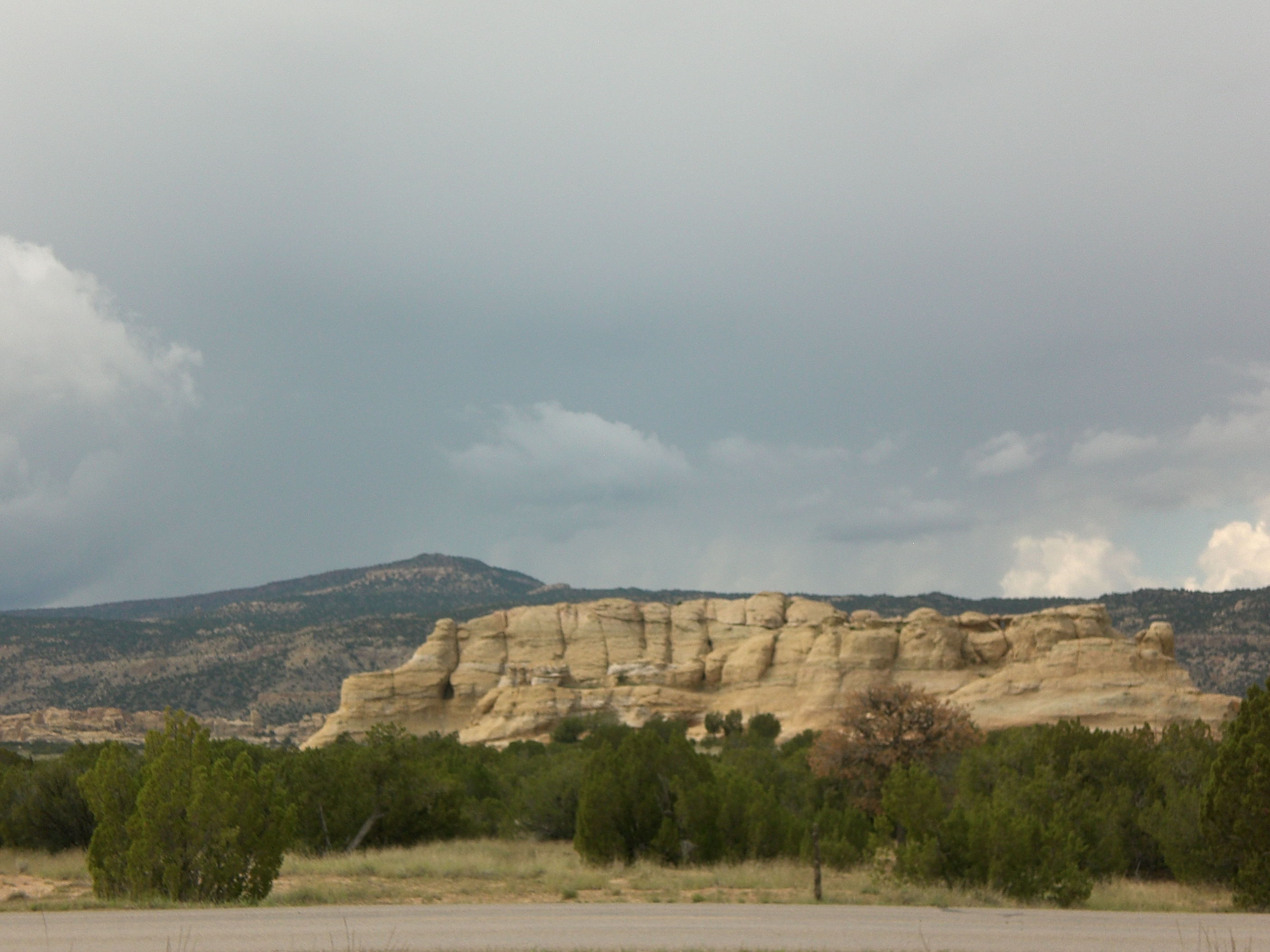
Bosque del Apache, New Mexico

Bosque del Apache, New Mexico

Call yourself idle and lazy for failing to do something constructive with your time. Then, rename that time as allowing yourself to be still and mindless, outside your usual sense of yourself. Which set of terms weakens you? Which seems to relax and yet energize you?

To a large extent, even when I’m not engaged in writing, I live my life through words. My grandfather taught me the importance of choosing the right ones, when he talked to me about his poetry. His choices were in Hebrew, and constrained not only by the meter and rhyme of his verse, but by his dedication to purity of the language. (Words created for items that did not exist in ancient culture should, in his opinion, follow the traditional structural frame as to number of consonant sounds).

My experience of parents whose behaviors were often in contradiction with their words led to my dedication to accurate and clear communication. A lonely and isolated childhood built my desire for connection with others, and to the understanding that communication is a two-way street. I do not communicate when I talk (or write); I only communicate when what I say is heard and understood by another.

For others to hear and understand me, I need to understand them – hence my choice of psychology as a major in college, and my continuing interest in neurology now. Also my engagement with the several programs I lead or teach (including Alternatives to Violence Project and Chronic Disease Self- Management), both having to do with learning concepts that help one direct and control behavior.

Which brings me back to Ba Gua, teaching my body new ways of moving, and simultaneously reinforcing flexibility of mind. And back to the importance of just the right words – stillness and emptiness creating a vacuum which attracts energy, to be stored and contained until it explodes into action. So much more sustaining than to label my down time as idle laziness that should be filled with doing.

The first time I attended a feast day dance at one of New Mexico’s Pueblos, I observed a dancer carrying an old-fashioned alarm clock, the sort that is wound with a key, ticks loudly and has a clanging alarm. The dancer teased non-Native observers with the clock, shaking it in our faces, setting off the alarm suddenly and startling visitors with its discordant noise. Eventually, he tossed the clock away and joined the line performing traditional steps in a mesmerizing, repetitive pattern. Time did then disappear, as spectators and participants focused totally on what was happening in the moment.

I suggest that much that we like, whether a good book, a particular hobby, an activity, or a piece of art or music is liked precisely because it has the capacity to capture our attention strongly, and thus to eliminate our sense of time and ego. Being present in the moment with the object of our attention creates a satisfying energetic stillness, and an expanded sense of connection, of capacity, of self.

Those fortunate individuals who are able to combine such likes with their means of employment do not describe what they do as work. They are more apt to describe a career as pursuing a passion. Those less fortunate in the choice or conditions of employment go to work, and then try to find free time for pleasures to balance what they have sacrificed for the earning of income.

You may have noticed in previous posts that I have not called my new job “work”. For the past eighteen months, I’ve been able to live mostly in the present moment, doing what is in front of me to do each day. I really like this way of being. My intention is to continue in this manner, acknowledging that there will be more things in front of me to do, in many of the upcoming days, than there have been in the past ones. I have determined not to change my approach to the doing of them. I will find energy for the doing by assuring that I remain centered in being.

As my body improves its stability and strength through Ba Gua practice, so too my mind – and its use of words – expands its capacity to “hold the tension of opposites” and to achieve balance. For important external reasons, I am starting a new job. For vital internal ones, it will not be work. Activities required of me by the new job will be integrated into the pattern of observing, of writing, of being that has nourished me of late.

Please, if you notice that I’m falling away from center, alert me! If my words seem poorly chosen, my posts less reflective, give me a nudge. I need to know that I’m continuing to communicate with you, not slipping into a stress-driven rant.

Thank you for reading, and for feedback.

An Appreciation of Habits

October 6, 2013

Interesting how many unthinking habits are revealed when the pressure tank in the well fails, and a household is without water! Over the years, we’ve been waterless several times, for different reasons. The most difficult was the winter it got down to 30F below and someone forgot to leave faucets dripping, resulting in a frozen water line. That time it took 4 days to restore water flow, fortunately without associated broken pipes. Four days of not being able to flush toilets, or easily wash hands. Of hauling water in three gallon bottles, doling it out in dribbles for washing with a cloth in the sink, “birding off” as a friend used to call it (another acquaintance used to refer to the same process, I know not why, as a whore bath).

This latest episode of being without running water lasted only a little over 24 hours, in warm enough weather to need to shower, not just dab and dry. I gained experience at showering without access to running water back in my early teens, when we lived in Saigon.

Our House, a Very Very Very Fine House - Saigon, 1956

Our House, a Very Very Very Fine House – Saigon, 1956

Water only flowed in our housing compound for about two hours a day. The live-in maid would fill large vats with a hose from a standpipe, then carry buckets up to the bathroom whenever someone needed to bathe. Showering became a matter of pouring a bucket over oneself, soaping, pouring another bucket to rinse, and drying off. In the steamy heat, two or even three showers a day were necessary. A five person household used a vat of water just for bathing. The second vat supplied water for cooking and mopping and hand washing.

In those days, I also learned how to throw a bucket of water (the third vat’s supply) with just the right force, at just the right angle, into a toilet to force it to flush. In recent days, I learned I am still able to shower by the bucket, but have lost the knack of the toilet flush. Or maybe modern toilets are less amenable to alternative flushing procedures? In any case, the knowledge of how to manage without running water rose up from depths, at the same time as I caught myself automatically reaching behind to flush the toilet that had no water in its tank. Knowing there was no water did not stop the unthinking hand gesture.

How many other actions of daily life, including much less mundane ones, do we unthinkingly perform? How many aspects of our routine do we take for granted? And what about people… how often do we take them for granted? Or respond to them out of habit? Or respond to a present situation with an inappropriate habit learned in childhood?

Regrettably, my mother was only able to experience disappointment with life. She had a unique knack for projecting that disappointment, ensuring by her actions that anything I looked forward to with happy anticipation would fit her world view, and therefore not materialize positively in my life. My childhood was one of fearing to express what I wanted, since to do so was to assure it would not happen. Put differently, I became ingrained with the behavior of waiting for the other shoe to drop. As I matured, left home and began living my own values, I gradually freed myself from maternal negativity, and experienced lots of positives. Life brings mostly what one looks to receive from it – and I look with curiosity for new opportunities, good friends, and spiritual growth. I’ve been blessed to receive an abundance of all these.

So – how surprising to discover, in recent days, that a corner of my being is busy defending itself against a shoe dropping, in relation to my upcoming new employment! Why am I suddenly hearing myself reason that I should delay certain purchases because one should never “count chickens before they are hatched?” In ten weeks of living and working on the Maine coast at a home without electricity, I ‘forgot’ the habit of reaching for a wall switch when I entered a dark room. So why do I, after 50 years of living away from my mother’s fearful negativity still subconsciously duck and cover in response to upcoming positive and desired changes?

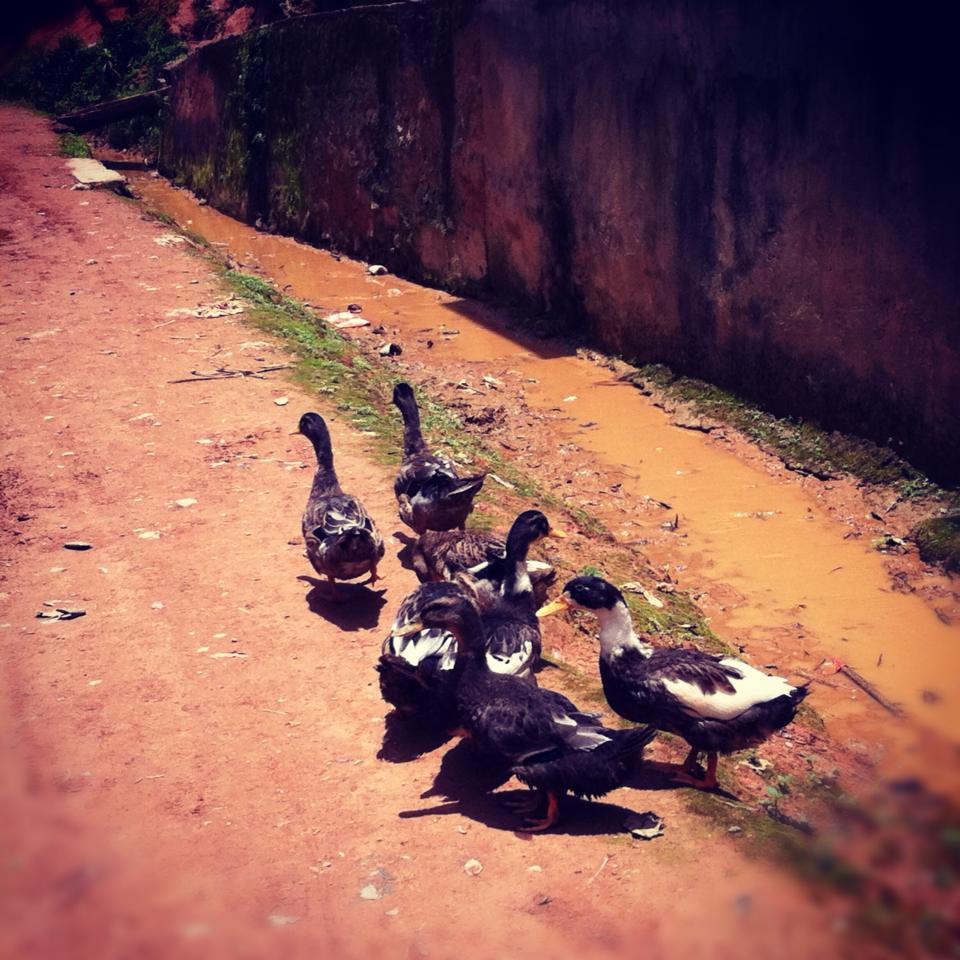
The Habit of Following Along

The Habit of Following Along

Well, at least I recognize the old emotional habit and can now practice setting it aside. I hope I have more success breaking that pattern than I’ve had with the one that leads me to look up to the right as I leave my living room. For nearly 20 years I had a clock on that right-hand wall – it’s been gone for 2 years now but I still glance there to see the time. And then laugh at myself. I suspect that being able to laugh at practicing an outdated habit is a step in the direction of letting it go, so I will chuckle to myself if I fall back into emotional duck and cover. What better way to switch over to a positive attitude?

And I do intend to retain the habit of washing with minimal water, although not the bucket method needed so recently. Collecting the water that accumulates until a suitable temperature is reached, and turning off the shower while soaping up, have become common sense habits in our continuing drought-plagued environment. Hmmm… I wonder, if someday I move to a place where water is abundant, will my water-saving habits endure?

Sounds of Silence

October 1, 2013

First, I should explain that a different type of silence was imposed on me over the weekend, preventing me from putting up this post when I intended to do so, on Sunday afternoon. The internet link at the motel where I was staying was somehow incompatible with my computer, and the IT people weren’t able to reset it properly. I am back home, and once again connected – able to ‘speak’.

Thank you for patience, for reading, for following, for being there.

Niki
**************


Noise pollution is one of the issues not being adequately discussed in relation to my county’s examination of a proposed fracking ordinance. I brought the topic into the discussion, and I have to keep raising it as others focus insistently on water quality and scarcity, and contamination of the air and soil. By comparison I suppose noise can be considered a less significant negative – but not to me.

I live in the countryside – what most people would consider a truly rural area. My small 900 square foot house is set back from the road, on four acres, abutting a several-hundred-acre ranch. I have three neighbors – houses close to the road with entrance driveways off it, in a cluster with my own entryway. Across the road are two more homes. Most of the time, those neighbors are quiet – so much so that I wonder if they are at home. No loud parties, nor growling outdoor machinery.

I do hear traffic on the highway. My house is situated on a hill toward which the road heads before it veers off, resulting in the longish driveway that snakes from the road up over a hill to my front door. Sitting in my living room, looking out its floor to ceiling windows, I can see a section of the road, and all the vehicles that travel up and down it. I cannot see – but can hear clearly – the heavy trucks and the rattle of gravel excavation that is going on a further 2 miles away, on a section of land that “ought” not to be considered to be in my neighborhood. Something about the lay of the valley funnels that noise straight up to my house.

The gravel operation is new this summer. I don’t know yet if I’ll notice it when my windows are closed, but I am very aware now, with windows wide open, of the days it is running and those, like today, when it is not. Perhaps I’m more sensitive than other people to the ambient noise within which I live?

I do not like to have music playing “in the background” of my days. I work better, think better, live better in silence. I enjoy music, go to concerts, play records (there’s an oldie for you) or CDs with intention to listen to them – emphasis on the intention to listen. If my intention is to work, I prefer to do so in silence.

Undoubtedly, that preference has something to do with my enjoyment of Quaker Meeting, and Buddhist zazen sessions, as well as my own daily spiritual contemplative practice. Undoubtedly it also has something to do with my appreciation of the skill of the young musicians from Curtis Institute who performed Britten’s Quartet #3 for Strings at a recent Music From Angel Fire concert near my home. Two of the piece’s five movements, including the last one, end with a prolonged silence defined by the musicians holding their bows immobile above the strings of their instruments until, as one, they relaxed in their seats, signaling the end of the silence that was part of the movement, and the beginning of the silence into which the audience could inject its noises of appreciation.

Once before, many years ago in Boston, I attended a concert which featured a piano performance that included long silences as part of the piece, and then too I was able to ‘hear’ the difference in quality between the silence that was integral to the music, and the silence of the piece’s end. That time, as I recall, I had no visual cue. I was sitting too far back, in the cheap seats, to see the pianist’s hands. I could only rely on my ears, and the pianist’s flawless sense of timing, to distinguish when musical silence transitioned to an appreciative silence from the audience, which in turn transitioned into loud applause.

A few of my acquaintances seem to understand what I mean when I express my awareness of the difference between the silence of Quaker Meeting, and that in a Zendo. Even the famously silent Meetings (the oldest, historical ones in Philadelphia) which I have attended, have a busy-ness to them, a sense of minds occupied with focused reflection, that is distinctly different from the no-thought silence of a practiced group of Buddhists in meditation. And different again from the life in silence of the Benedictines (and their guests) living at Christ in the Desert Monastery. Different yet again from the experience of many hundreds of chelas (students), attending to the silent communication from our Beloved Teacher at a MasterPath gathering. Dare I say that there are many different sounds of silence?

(Yes I know the Simon and Garfunkle song The Sound of Silence. It doesn’t fit into my narrative because the song is about the negative aspect of silence – silence as a barrier to communication and a symptom of loneliness.)

We seem, in the modern urgency of tuned-in lives, to have forgotten the old adage that silence is golden. We settle for the silver, the copper, even the dross of noisy, busy “I’m somebody, doing something important” daily life and think we are fulfilling ourselves. Just yesterday, I had a Facebook ‘chat’ with a young friend who is torn between his desire to study the classical languages necessary to read ancient Buddhist texts in their original, and the supposedly practical necessity of getting a degree in a subject that can lead to a job. How practical is it, to go against one’s nature, to ignore the still, small, inner voice directing one toward a path of spiritual fulfillment, in favor of a loud, outer, boisterous demand to focus on earning a living?

Inside golden silence, there is much to hear and learn. Whole worlds of perception, of wisdom, exist within our inner silent spaces. Would that we all, individually and collectively, were more insistent on spending time in that beautiful silence within! Would that we all, individually and collectively, could share the golden wealth to be acquired from listening to the songs of the Divine played so beautifully within us. Listen…. and you will hear…

The Tools of our Trades

September 23, 2013

I make it to the New Mexico State Fair just about every year, including this one. Some events, like the Fine Art show, and the Hispanic, Native American and African American art and cultural shows are housed in permanent buildings not too far from the entrance to the fairground. To get to them – and to all the other “housed” activities – one must walk past a midway full of rides and also past clusters of food booths selling barbecued turkey legs, ribbon potatoes, lemonade and – this year at least – such exotica as frog’s legs and fried ravioli on a stick.

Next one must negotiate the plethora of booths filling both sides of the main “streets” of the grounds. These are all commercial. They offer multiple opportunities to acquire surprisingly similar items, from painted faces to sports memorabilia and cell phone accessories, purses, dresses, make up, the latest fads in hair adornment, and cheaply made but not cheaply priced glitz jewelry.

Farther into the grounds are a Spanish village and a Native American village where culturally traditional items and foods are sold, and groups perform appropriate music and dances. Also near the middle of the grounds is a large building housing the many types of items we older folk associate with the shop and home economics classes that used to be mandatory in all junior high and high schools, but which now seem only to be found in the context of career programs at community colleges. Wood workers, quilters and seamstresses, experts in home canning and baking submit their finest products in hopes of winning a coveted blue ribbon.

Nearby there is also a space for flower arrangements. Other hobbies are represented as well. I acquired a book mark with my name in exquisite calligraphy, and watched two ladies carefully making lace, twisting bobbins around the pins which mark out a pattern. I remember seeing the famous lace makers of Bruge, in Belgium, sitting in the sun and chatting as their bobbins flew in complex designs they knew by heart from a lifetime apprenticeship in an ancient craft.

One has to complete a long walk across the full length of the fair’s main street in order to get to the true core of a state fair – the animals.

4-Hers and adults spend years breeding to obtain a perfect specimen to enter into their county competition before advancing to the state fair. Horses are trained to perform complicated maneuvers, mule and draft horse teams pull wagons or increasingly heavy loads on sledges, demonstrating their ability to perform the classic work of a ranch. Judging the quality of livestock is a learned skill, often passed down within families. As I walk along stalls with handsome palomino heads protruding to be admired, I overhear a discussion of which judge will be in charge – competitors clearly have their own favorites.

There is much less foot traffic at the livestock end of the fair grounds. Kids tug their parents to the petting zoo and pre-teen girls congregate in the open space between the rows of stalls where their horses wait with them to be called into the ring for their classes (the level of competition each has achieved, showing off the gait and conformation of their rides). Older teen boys lead cattle of various breeds and sizes to and from their show ring, talking about weight and sale price. Many of the animals, like much of the handwork in the crafts building, will be sold or auctioned before the fair ends.

Sitting on a bench near the horse stalls, enjoying a treat of ribbon fries, I try to imagine what the fair would be like without all the commercial booths – or at least only with ones related to farming and ranching. There are no representatives of John Deere on the main street. Instead, lines of old cars are displayed, most from the 1920s, including an early fire engine whose siren sounds whenever an ambitious child cranks its handle. What was marketed at the fair when the attendees arrived in those early Fords? Back where I relax in the livestock area, it is not hard to imagine myself in that earlier time.

I suspect there would have been many more teams competing in the draft horse heavy sledge pulls. And many of the contestants would have arrived by horse power, not automobile. Canned goods, instead of being one row of the crafts building, might well have taken up a tent all on their own. The same with sewing and quilting.

I can’t help but feel dismay that our modern preoccupations, if assessed by the balance of items offered up to view at this year’s Fair, have become so faddish. And so mass produced. And so poorly made.

OK, we’re living in a wired age and we are hooked on our technology. So, where are the hand-beaded cell phone covers? Why don’t I see tooled leather cases for laptops? What has become of pride in beautiful, well made, durable crafts to embellish the tools of our modern everyday trades? Why are hand painted Easter eggs, braided rugs and crocheted blankets considered only to be examples of “saving the skills of the past?” How did these arts become locked into traditional forms, instead of adapted to the items most commonly in use today?

In the Vicinity of Acoma

In the Vicinity of Acoma

English: Original lithograph for report of J.W...

English: Original lithograph for report of J.W. Abert of “His Examination of New Mexico in the Years 1846-47” to the Secretary of War (Photo credit: Wikipedia)

The day following my visit to the State Fair, I was escorted by a friend to one of the last places in New Mexico that I wanted – but had not yet made it – to see, Acoma Pueblo. The majority of current tribal members live in two communities in the valley, near Interstate 40 in the western half of my state. According to our guide, only about 30 people (of about 6000 tribe members) still live atop the mesa that is historical (from the 1100s) Acoma. Most of those who do live on the mesa appear to be the potters and practitioners of other traditional arts who market their wares to the groups of visitors escorted on tours coordinated by the tribe.

Our tour guide provided a lively account of the history of Acoma, in an interesting language style which notably did not use standard past tense. “The people were living atop the mesa and were welcoming the first Spaniards to come to their area. Because the straw in the mud coating of their sandstone homes reflected golden in the sun, the Spanish were thinking they had found the mythical Seven Cities of Cibola, so they were demanding that Acoma turn over its gold and, not believing there was none, they began subjugating the people with torture and killings.”

The effect of our guide’s narration was to make his listeners aware of how differently the Acoma people (and most other Pueblo tribal groups I’ve interacted with) perceive time – how intimately their distant history informs their present day lives. The mixture of tradition and history with modern innovation and adaptation is also evident in the Acoma art – mostly finely painted and incised pottery – which was on offer. Some of the artists appeared dedicated to repeating ancient family patterns; others clearly added personal perspectives and made use of new colors and forms, while still reflecting traditional cultural styles. I was delighted with the demonstrated Acoma talent for maintaining art forms yet adapting them to modern needs!

WLA brooklynmuseum Pueblo Acoma Water Jar

WLA brooklynmuseum Pueblo Acoma Water Jar (Photo credit: Wikipedia)

I hope some of my online friends whose work lies in the decorative arts will take up the challenge implicit in my two days of contrasting experience. Can someone run a contest to see how many different “traditional arts” can be adapted to making modern day accessories for our ubiquitous cell phones, laptops and pads? How about a quilted dash cover? A pretty lace wrist strap for the new wearable smart phones? It would be such fun to visit the State Fair again in a few years and, instead of what I overheard one visitor describe as “so much schlock”, see rows of booths offering well-made, hand crafted items of practical use to the modern, hip visitor!

Creativity in a Second Language

September 15, 2013

I’ve started a new class through Coursera – a MOOC – that apparently has close to 125,000 people signed up for it worldwide. Mind boggling to think of that many students going to class together. The topic is Creativity – and in keeping with the course’s intent to promote more creative lives among the students, I’ve joined a subgroup of French speakers enrolled in the class. A challenging way to resurrect my skills with a language which I once spoke and wrote fluently, but which I’ve had little occasion to use in the last thirty years. Since the class is on-line, that means I’m writing French – the most difficult way to use a language skill. Should be an interesting eight weeks!

The first assignment included an option to make a sort of life map – identifying a core value at the center of everything one does, and then listing 3-5 priorities in each area of life, such as family, career, community, etc. I found the exercise relatively easy to do, given that my spiritual path (MasterPath) calls for a consistent effort to examine and process one’s life experiences. But I also attribute some of the ease to age – one doesn’t get to 70 and still engaged with employment, learning and community service, without having examined one’s priorities, and kept tabs on how they evolve over time.

What didn’t get addressed by the Life Ring activity was what I’d call a question of style – how do you, I, we approach daily life? I’m scheduled to facilitate an Alternatives to Violence Project (AVP) workshop with a competent co-leader who is very organized, detail oriented, and most comfortable when every aspect of the workshop is clearly spelled out in advance, including how each activity links to a small number of specific topics. I on the other hand, like to ‘wing it’ for at least part of the weekend. I’ve put together an agenda that includes exercises which can be related to a number of different topics. Part of the challenge – and the learning – that I value in AVP is how it reveals interrelationships that participants have not previously considered. I trust my own skill at helping tie those relationships together, and therefore like to leave room for the unexpected to emerge as the activities are processed.

There’s a lot to be learned co-facilitating with someone whose style differs from mine. Birds of a feather may indeed flock together – but do they learn how to get along with those of a different plumage? We draw reassurance from associating with others like ourselves. We learn and grow when challenged by those with whom we have differences. Which makes the concept of thousands of students from a hundred or more different cultures all joining together to explore creativity a highly innovative concept.

The Francophone subgroup is on LinkedIn, enabling me to check the careers and interests of other members, as they can review mine. Most of those I’ve looked up so far are younger, in business, engineering, industry, very few list teaching, none that I’ve found so far work in social service or health-related careers as I have done. The instructors for the course want the students to find ways to apply the concepts we study to our fields of endeavor, and to work together in teams to develop those projects. I seem to have set myself up to stretch my creativity to the max, finding ways to apply my skills, in a second language, to areas of life with which I have little if any experience! Should be fun…Meanwhile, the course does stress that we all have the capacity to be creative – and that our styles do indeed differ. We have all been asked to take a survey that classifies us along a continuum from adaptively creative to innovatively creative. I come up moderately innovative. I suspect my AVP co-facilitator would land somewhere on the adaptive end of the dimension. I’m realizing, as I write, that by putting on the workshop with her later this month, I will have completed the major assignment of the course – which is to apply the principles of creativity, in conjunction with others, to an aspect of my professional life. Thankfully I don’t have to put on the workshop in French!

Memory Lane

September 8, 2013

Told that you will be spending two days with a former partner – lover, ex, intimate friend – from whom you parted on amicable terms but have not seen in 45 years, what would you expect to experience? Assuming, of course, that you are old enough to have so much time elapse between encounters. If you’re younger, compress the time appropriately, and include an awareness that you and the former partner knew you had different goals and would be traveling different paths. You parted amicably.

So here you are at the other end of a long separation, having pursued your divergent aims. You are going to meet not just your ex-partner, but that person’s current mate about whom you know absolutely nothing. Would you, like me, wonder if you’d find anything familiar in your former partner? Would you ask yourself questions about “the road not taken” and be curious to learn if you’d been correct to leave it? Would you – unlike me – obsess about your looks and how you’d aged and whether you’d still be found attractive?

Turns out, I had the interesting and enlightening experience of both appreciating the qualities that originally drew me to this particular former partner (FP), and recognizing how our differences had deepened into a rift which would inevitably have pulled us asunder. We were indeed lucky – or perceptive – enough to have realized that we should separate “before any harm was done.”

What I didn’t anticipate was the extent to which the visit brought back other memories from my earlier life – memories not necessarily connected to the relationship, including memories of events from my early childhood. It was as though, once broached, the closet where I’d shoved recollection of much of my early life behaved as any physical closet stuffed to overflowing – it spewed out random items when the door cracked open.

Going for a Walk

Going for a Walk

Visits to the zoo with my grandfather, during which he talked about life, and values, and the challenge of finding just the right word for his latest poem. He queried my week and my interests and what I was reading. I was vividly reminded of those Sunday conversations when FP gently probed how I live and who I am now, in much the same way as my grandfather had sought to know me.

Memories of intensely difficult times with my mother, who had serious psychiatric problems. It took me quite a few years to overcome the effects of her paranoia, explosive anger, and abuse. FP perceptively commented on his recollection that my mother also had an abusive mother, in the context of mentioning that he and his present wife were lucky to have grown up amid very positive family lives. I know now what it’s like to feel supported and encouraged by a set of caring supporters. And I also appreciate to what extent my adventurousness and my inability to fit neatly into the socially defined role FP offered, arise from the instability and emotionally volatile nature of my childhood. I’ve not had an easy life, but I’ve certainly had a varied, challenging and infinitely rewarding one.

Also tumbling out of the closet were memories of other relationships, rather a lot of them, mostly all pleasant. Such a range of different types of people I’ve come to know and value as friends! People who are very far removed from the European immigrant, advanced-degree-educated, middle class traditionalist pattern of my parents and of FP. Motor cycle riders, cowboys, ex-cons, and prisoners still serving time who participate in the Alternatives to Violence Program workshops I facilitate in the New Mexico prison system. Sixth generation descendants of Spanish families who migrated into the New Mexico territories from Mexico, and who still speak English only as a second language. Some of them are conversos (crypto-Jews) rediscovering their family origins. FP and his wife, conservative Jews, were deeply interested to learn about this link to an area they now plan to revisit.

I’ve known mechanics whose crossword puzzle skills rival my own. Believers and practitioners of a host of religions, and of no religion at all. Providing home health care throughout a large rural section of the state, I’ve been welcomed into ancient adobe homes with sod roofs, ranch headquarters in the midst of thousands of acres of range land, luxury second homes for people who spend half their year in Texas, and the truly mobile homes of a couple living permanently in their Winnebago.

Amidst the tumble of memories spilling forth, I find and grab onto a gem of an idea. I ended the relationship with FP because I knew I did not fit within what felt to me like a confining, prescribed role. I was not at home within a “family” structure. It turns out I’m not at home within any other established structure I’ve encountered in my life journey. I’ve fit myself into them (work, a variety of different cultural norms) to get along, but none have felt like ‘home’. I belong nowhere. Ergo, I belong everywhere!

Perhaps that’s why I’m planning to start a new career within weeks of turning seventy, and then, four or five years from now, I’d like to take off to live once more in a different country. Somewhere with a comfortable climate for older bones, where I can teach, and learn, and continue my life adventure. I’ve been dipping into memories from the past. I’ve defined a possible future to hold in intent. Meanwhile, it’s time to resume the most important aspect of Being – living in, and appreciating, each moment of the present.

Older… and Wiser?

August 30, 2013

Have you noticed that the ‘older’ part of ‘older but wiser’ is singularly obvious in wrinkles, aches, and the need for Post-It notes littered over every surface – but the wiser part is much harder to recognize? Especially when the dog mouths one of those Post-It notes, and you have to make an extra trip back to town for the three forgotten items of the six that you need to make supper.

How delightful, how ego-boosting it is, then, when circumstances allow you to recognize that the ‘wiser’ at least occasionally manifests. A recent experience allowed me to feel grateful for whatever passes for wisdom in my brain. I had thought to pursue a course of study which would require me to hold in equal respect two conflicting paths to spiritual understanding. My training directed me along one path, my mental inclination tempted me onto the other. The studies would have meant constantly balancing two goals, two world views, two concepts of self. The outcome of the program would have enabled me to practice in a field I’d like to enter, for which I do not – at least at this point – see another means of qualifying.

So I did all the paperwork, wrote the essays, completed the application – and then was denied acceptance. What to do now???

Here’s where the wiser comes in. I did nothing, just let the fact of the denial settle into my awareness. Within a few days, I had one of those blessed “aha” experiences, a flash of insight that allows me to lay at least passing claim to wisdom. Recognition is enough! Seeing the differences between the two paths, understanding how different aspects of myself are drawn to each of them, and knowing that I am capable of continuing to follow one while learning the other – that is the recognition. And it is enough. I don’t have to also undergo the stress of carrying awareness of the paths and their differences through a two year course of study.

Wiser seems to be at work in my growing ability to move through a mine field of life choices while maintaining a ‘neither for nor against’ mentality.

Older is definitely a handicap in my search for paid employment. I cannot help but believe that the on-line application and screening systems which substitute for preliminary job interviews include an edit that discards all applications with college graduation dates before 1990 (the application isn’t accepted if a graduation date is left blank). No other explanation accounts for a year of denials of my applications for positions for which I meet every criterion, which mirror work I have already done successfully, and which are written using all the key words of the job description included in my work summary. Wiser allows me to keep the constant rejection at arm’s length, not translating it into a feeling of personal inadequacy. The right income opportunity will come my way, so long as I keep an open, explore-everything approach to the search – and all this rejection is good practice for the inevitable “send out twenty stories to get one accepted” that mark a writing life.

+++++++++++++++

Older is what I will be – starting another decade – on my next birthday in the autumn. Wiser is what I hope also to be by then, having learned the parameters of a new job which I’ve been offered, and having experienced yet again the virtues of patience. I’ve been hired into a position which exceeds every criterion I had set – flexible hours, service to others, supportive and enjoyable coworkers. And I have almost two months to discern how to maintain my established writing pace while fulfilling the job’s requirements. I’m old enough to know that won’t be easy. Hopefully I’m wise enough to know both how important the writing is to my sense of well-being, and how possible it is to “have it all.” With patience, I will see the way.

A Good Day

August 23, 2013

It seems to be perversely part of human nature to never be satisfied.

Through months becoming years of drought, we in the northeastern New Mexico high-mountain desert worried about the lack of rain. Our brown grasslands, swirling dust devils, raging fires and smoke-poisoned air were prominent in every conversation.

Until just a month ago, when suddenly, for some of us, things changed.

Water began to come out of the sky, in thick sheets, on almost a daily basis. Not everywhere, not for long periods of time, but enough where it did appear – including where I live – to turn the prairie green and yellow – green weeds shooting to chest height, yellow wildflowers making wide swaths of color especially where run-off water has pooled.

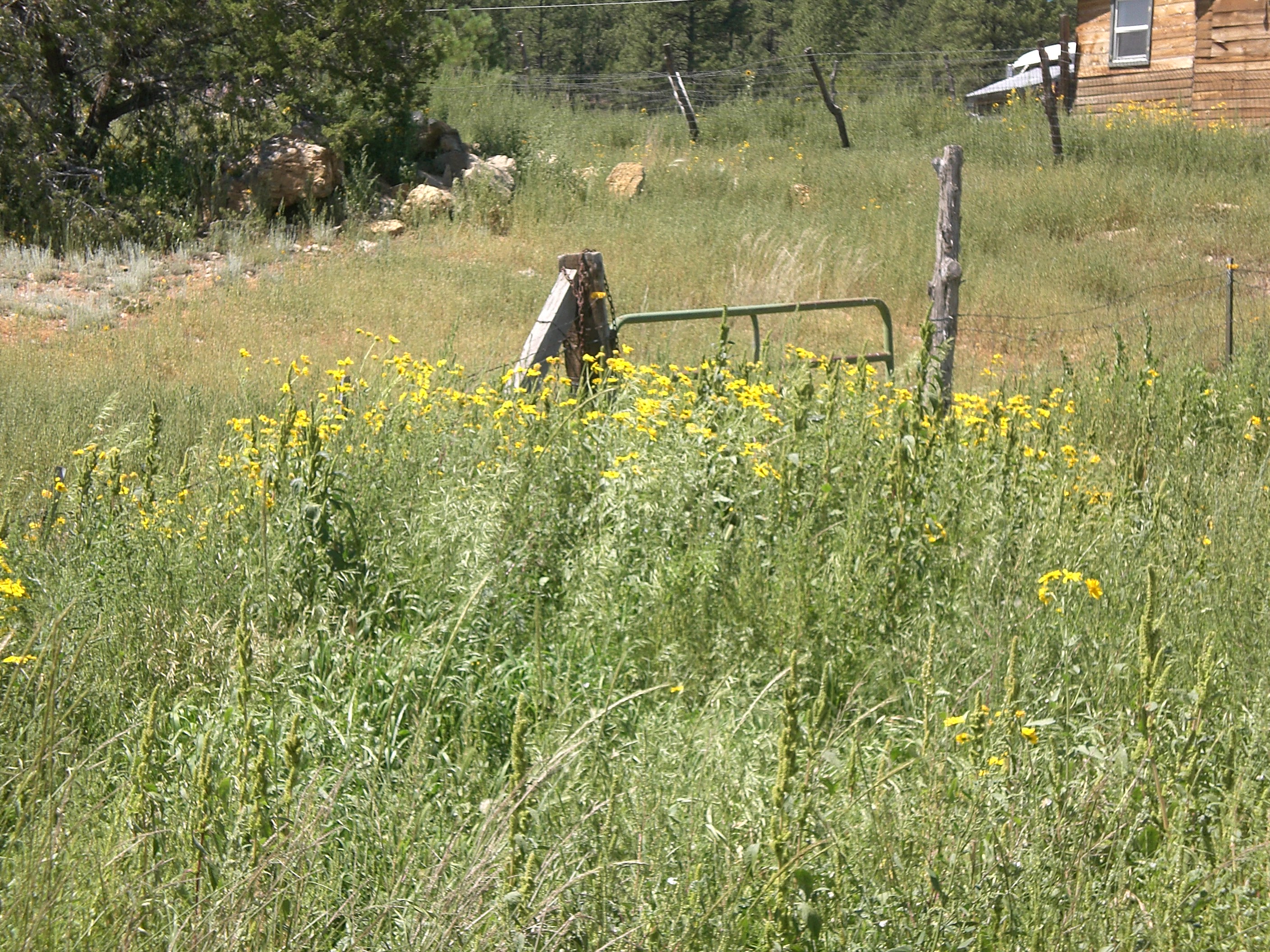
Rain Gate

Now I hear complaints of pollen-allergies, and worries about the burrs and needle-like seeds that will permeate everything – especially the fur of four-legged pets – as soon as the short-lived grasses and flowers dry out this autumn. People hustle to find mowers and weed eaters, to chop down the lush growth, the absence of which was so recently bewailed.

Today, the sun is shining, there’s a cooling breeze, hummingbirds are hovering over the purple thistle flowers, and a dove is pecking seed from beneath my bird feeder. A few puffs of cloud float in a dust-free postcard blue sky. I’ve had to use the snips designed for nipping small limbs from trees, to cut down the largest red-root weeds blocking the steps to my home. A friend has promised to come mow, before I have company over Labor Day weekend. Not all my acres, just the area immediately around the house, so I can get to the bird feeder and the outside water hydrant without wading through chest-high weeds. So my guests can get into the cottage door without scratches to their legs and prickers in their clothes.

Nothing I can do will prevent the forthcoming torment to dogs and cat. Daily brushing, sessions of picking out burrs, even a close shearing of coats (canine at least) can reduce but not eliminate the pending assault by things that stick and sting and burrow into skin and paws. It’s been so long since we’ve had rain, and weeds, in summer that none of the current crew of pets has experienced what is in store for them. They are all too young.

Green Pastures

I am not too young. I remember, ten years ago, the last time we had summer rains and weeds and wildflowers and enough grass for horse hay to be a reasonable price. I remember the quill-like needles that result from those pretty yellow wildflowers dropping their petals, drying and disseminating their seed. I remember the cockleburs, brown and clawing, so sharp they pierce the leather of my shoes as I walk by them; so sharp they even caused my horses to limp until the spines were picked out of their hooves.

I remember, but today I will not complain. Today I enjoy the sun and the cool breeze and the green vistas and the dancing yellow flowers. Today I am grateful that we have had rain, and a respite from dust and fire and smoke. Today is a good day to Be.

Choices

August 18, 2013

For the past year I’ve been living in a way most of us are taught not to… day to day, with no ‘life goals’ and few plans that reach more than a week or two into the future. It’s a natural way to be; children wake each morning to a truly new day, one full of possibilities. They have to be trained to ignore distractions and to stay focused on mandates – good grades, keeping a room picked up, personal cleanliness, helping with household chores, thinking ahead.

Oh yes, thinking ahead. You didn’t make your bed when you should have done, so now you have to do it instead of watching your favorite TV show. You should have thought ahead! You’ve been skimping on your homework, now you’re failing 5th grade, though you’ve been warned over and over. You only have one six week grading period left to bring your work up to acceptable level. You’ll be doing nothing but school work from now until the term ends. No trips, no play, no time for fun… you should have thought ahead!

Sorry, Mom and Dad, but I’ve been determinedly not thinking ahead. There is a point, ahead out there somewhere, when I will run out of savings and, without income, be destitute. I’m not ignoring that fact, but I’m not focused on it. My wise teacher instructs that attention is food – what one attends to grows in one’s life.

Conversely: ”If you want something to leave your life, take your attention off of it.”

I see no benefit from worrying about a maybe some three years off into the future, so I am attending to what is here with me in the present. I have been searching job boards, applying for everything that seems a possibility. Like many older people in the job market, I get few responses. Experience seems not to be valued any longer. Employers want new young minds to train to their special priorities. They want to mimic parents, who know instinctively that training children to think ahead, plan for the future, and learn habits of daily living is easier when the children are young and haven’t yet had enough experience to question the parental dictates.

So how do I communicate, in a standard application and resume submission, that part of my experience has been learning to be open to new ways of doing things, new goals and new achievements? Do I say that I have been living day to day for a year now, proof of my ability to be flexible and adaptable? Do I use, in a cover letter, another image from my spiritual teacher, of riding a horse up a creek and, at a moment’s notice and for no conscious reason, jumping the horse up onto the bank? Knowing when to listen to one’s inner voice (intuition, or spiritual knowing) can indeed be the skill that saves one, in what turns out to be the nick of time, from a tumultuous flash flood gushing down the creek bed.

Asked what I’m looking for in new employment, I could perhaps best answer by saying I seek the employer who will appreciate the depth of meaning in my teacher’s story. Or one who could read Lesley S. King’s recent post entitled Face Your Inner Mischief, about her yapping mind, and understand it for the beautiful parable it is. I seek an employer who has the ability to appreciate the innovative, the creative, the self-directed in others because that is what he/she is also. Someone not threatened by new ideas, not hearing questions as challenges to authority but rather as the positive contributions of an assistant engaged in the process of achieving goals which, themselves, may shift with time and experience.

Living each day for what it offers, as I have done of late, could be considered a rejection of the values my parents, particularly my father, taught – to plan, to delay immediate gratification for a larger achievement; to save and be mindful of expenses, so as to have financial resources when they are needed; to be cautious and consider all possible consequences before acting. Indeed, much of my life could be seen as a rejection of those values; I’ve left higher paying jobs for lower paying ones on a matter of principle; I’ve spoken out about fundamental rights and been blacklisted; I’ve challenged the status quo in large and also in small ways, living as my friend Jane said recently, when she wrote, “I did what the Holy Spirit led me to do, and I can do no other.”

Nonetheless, there is a way in which I still embody the underlying lesson my father – and most parents – try to teach their children. That silent message is about acquiring the ability to choose – i.e. to have an understanding of cause and effect, an ability to be patient long enough to experience outcomes, and a sense of what information comes from within one’s being and what is imposed from ‘outside’. With these three skills, one can choose – to follow outside dictates or respond in opposition to them; to stick with an unsatisfactory job or to leave it without another already in place to go to; to value integrity more than security, or patience more than impulsiveness.

Ultimately, it is our choices – or lack of them – that define our lives. Lucky is the child of a parent who knows to teach how, but not what, to choose. Blessed is the individual who learns from a spiritual teacher that worlds exist beyond the mundane, and that we all have within us the capacity to manifest Truth, to Hear the Word, to be led by the Holy Spirit, in whatever language or manner of Knowing we choose to embrace.

As I continue to practice not knowing, living open to whatever turns out to be my ‘next step’, I am content. I have made my choices and, again like my friend Jane, I have paid a price, but “I would do it all over again.”

It’s good to know that I’m fulfilling my promise to myself, made shortly before my grandfather’s passing, to live my life so that whenever my time of transition arrives, I will have as few regrets as he did on his deathbed. His nearly final words to me were, “I possibly should have remarried – it would have been better for your mother, but I never found a woman I wanted to marry… and I wish I’d learned to play the mandolin.”

May we all make our choices such that we can sum up our lives as contentedly and succinctly!

Night Blooms

August 10, 2013

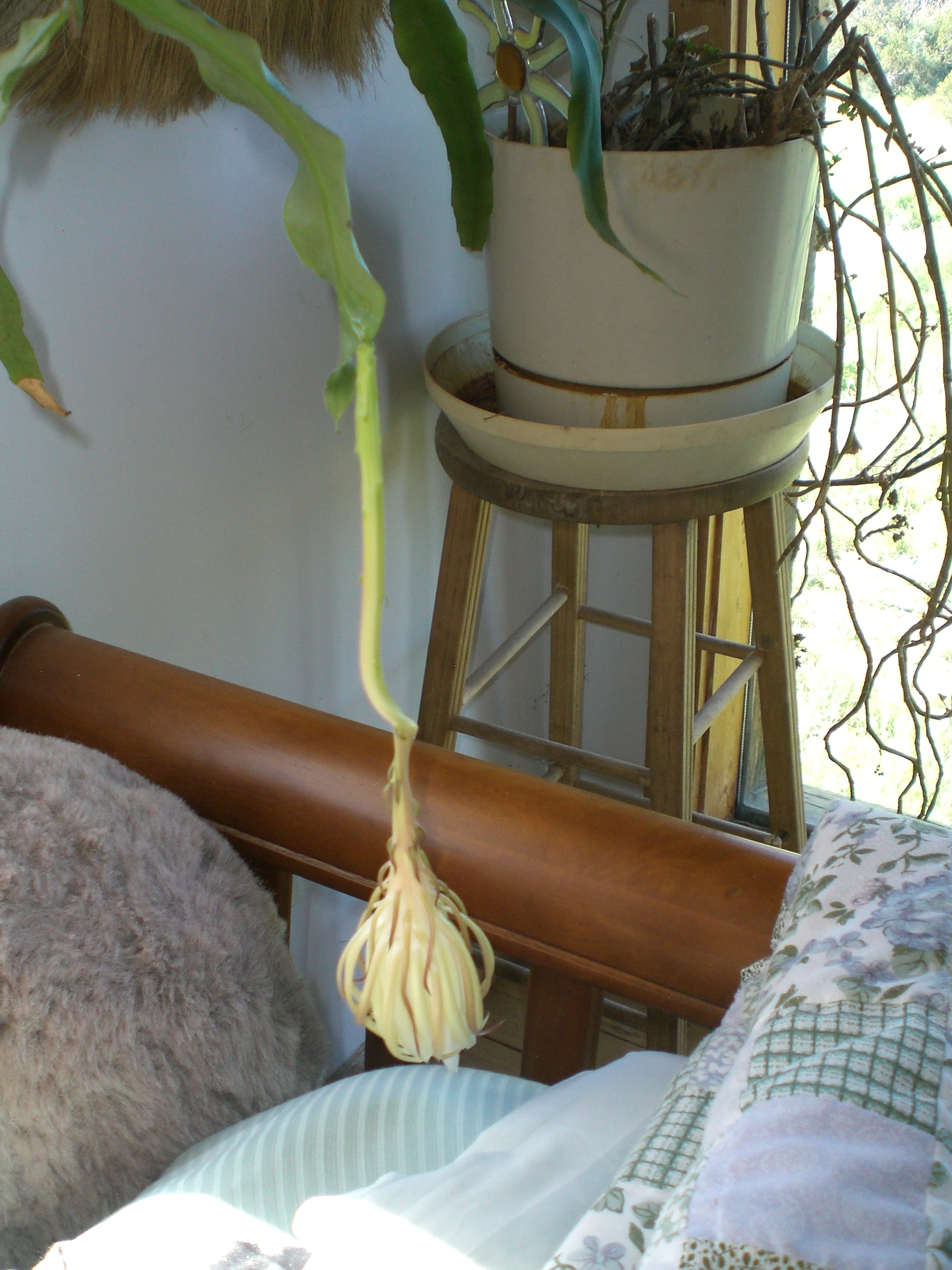
A night-blooming cereus hangs from the ceiling of my living space, in a large pot supported within a chain and wire basket. It sends ‘arms’ in all directions, tries to push tendrils between the cracks of a beam and board ceiling, and generally does its best to mimic the hedge of its natural, wild state. Periodically I have to detach bits that are adhering to nearby window shades, or creeping through the ornamental Asian brooms hanging on the wall close to the plant. The cereus recreates a jungle environment for a large wooden fork and spoon from the Philippines and two woven straw brooms from Vietnam. And every so often, it blooms. On rare occasions two blossoms at once.

Mini-jungle

Mini-jungle

The flowers begin as tiny shoots attached to a leaf, indistinguishable from those which will in fact become new leaves. They seem to hide themselves among the foliage for a week or more, until they become large enough to be recognizably a flower bud. They then take an additional several days to enlarge, standing outward at a sharp right angle from their support, before opening fully late one night (usually close to midnight).

Almost there

Almost there

During the brief hours of full bloom, the flowers give off a delicate sweet scent, a single flower sufficient to perfume the ten-by-eighteen foot room.

Fully open

Fully open

Over the next few hours the flower closes and its supporting stem collapses, so that by morning the entire leaf appendage is hanging straight down and the leaf seems to beg for relief from the dead weight.

Exhausted

Exhausted

As often as I have watched this process through (admittedly not staying awake much after the fullness of blooming) I remain unable to predict exactly which night the flower will choose to open, nor have I been able to discern what triggers the plant to produce a bloom. It has flowered in all seasons, no more frequently when on a diet of bloom booster than when it is only given water. Sometimes, the shoot-to-bloom process takes six days, others it takes almost two weeks. Cereus fans whom I’ve found online tell similar stories of inability to predict blooming. One lucky person lives with a cereus “in its natural habitat” as a hedge, and is able to enjoy flowers night after night, perfuming her entire garden.

Cereus flowers are the unexpected, unpredictable sweet things in life, arriving unnoticed, while our attention is elsewhere – on daily chores, dwindling bank account, or perhaps the aches and physical challenges of aging. Focused on job applications, I come across an email from a friend, appreciative of some quality I’ve begun to doubt can be seen by potential employers. Engaged with the daily task of treating my Shih Tzu’s eye, I am surprised when his kisses replace his usual wriggly impatience with my care. And wading through waist-high weeds to reach the bird feeder, I curb my irritation at the discomfort, instead appreciating such a vital, flourishing response to rain in what has been a desert wasteland.

We are admonished to remember to ”stop and smell the roses.” Roses have thorns. There are all sorts of philosophical and historical entanglement associated with roses. So I prefer to think of the many gifts I receive – a funny, affectionate limerick from a friend, a smile of welcome from a cashier, glorious banks of cloud in sunset hues – as daytime cereus blossoms, all the sweeter for being for being unexpected and transitory.


Only Fragments

Love Letters to the Tar Pit

KarusaaVerse

Words that Sparkle, Thoughts that Ignite: Fueling Your Imagination

Leaf And Twig

Where observation and imagination meet nature in poetry.

Millarson Diaries

Personal Musings and Thought Experiments

The Beauty Along the Road

Discovering Beauty in the small details of our lives

Flowerwatch Journal

Notes on Traveling with Flowers

1eclecticwriter

Wide-Ranging Commentary

Spirituality Exploration Today

Delving into the cross roads of rationality and intuition

smilecalm

Life through Mindful Media

A Good Blog is Hard to Find

I will shatter a word and scatter the contents into the wind to share it with the world.

Ray Ferrer - Emotion on Canvas

** OFFICIAL Site of Artist Ray Ferrer **

AKA The Versatile

Fashion | Lifestyle | Food & Travel | Beauty | Fitness | Education | Product Reviews | Movies | Doodling | Poetess

Aging Abundantly | Women Over Fifty | Empty Nesters | Caregivers | Aging Gracefully

Finding Joy at Every Age with writer/philosopher Dorothy Sander

ARTZZLE

Helping with the Pieces in Life's Puzzle of Art and Design

Project Light to Life

A bucket list blog: exploring happiness, growth, and the world.

The Daily Post

The Art and Craft of Blogging

Any Shiny Thing

MIDLIFE MAGIC

allmostrelevant

@allmostrelevant

The Irrefutable Opinion

Assaults on the Casually Mundane by K. Jean King