Posts Tagged ‘communication’

To Heal a Tummy

January 11, 2015

The weather has been on a crazy whirl this past week – sunny and a spring-like sixty-five one day, icy twelve degree fog the next coating everything in sheaths of white rime. Then another warm day melting it all, to be followed once more by ice rime and black-ice accidents on the highways. We’re projected to have several more of these mood swings in the next week, around which I am trying to plan my work-related travel.

I regularly go up over the mountain (part of the Rockies) from my home to Taos. I have to accommodate my planning not only to the fluctuations of weather as I experience them where I live, but also as they manifest quite differently on “the other side.” Just last week, I spent a warm and lovely day seeing clients in Taos, and did not know it had been a fogged-in and icy day at home until I came back over the ridge in the late afternoon, and looked down onto clouds.

Above the fog

Above the fog

Bodies react to these unpredictable changes in climate. Old injuries begin to ache, remnants of bronchitis flare, sinuses swell and congest, even tummies become sensitive and refuse to function properly. There is a very direct cause and effect for the bone and joint aches – heat soothes and cold aggravates these types of reminders of past incidents. To the extent that the warmth releases pollens, chest and sinus irritations can also be understood as directly related to weather. But tummies?

I’m one of those who are most sensitive to what affects tummies. Mine has been – my husband sweetly calls it fragile – since infancy. I’m more inclined to use harsher words, like irritable, aggravating, infuriating. It’s definitely where any and every stress lands. My mother complained to all who might sympathize, that the only formula I could tolerate as a baby was one which required a great deal of work – a complicated process involving twenty-four hours of advance preparation and multiple periods of cooking. I also had many food allergies, and did not outgrow them until I was well into my teens. Some I have retained all my life, in the form of sensitivities I’ve learned to recognize.

Some days I can eat eggs, other days they make me very sick. And I react horribly to the ‘flu vaccine, incubated in eggs. I love fresh tomatoes, but have to moderate my consumption, and must avoid most cooked tomato products, like spaghetti sauce. Thankfully, I can usually enjoy strawberries, and most thankfully I’ve never, as an adult, re-experienced hives from eating hard-shell seafood. I am gluten intolerant, have probably been so all my life but have only accepted and adjusted to that limitation in more recent years… hmm… nearly ten years now.

I’ve repeatedly questioned why, when I mind my diet and adhere to its restrictions, I can still suffer from severe and usually totally unanticipated abdominal distress. It’s too easy to blame the weather, claiming some as yet unrecognized link between storms and digestive upsets. My latest bout was with an actual bug that is going around.

Identified cause, commonly experienced effect.

I treated the episode partially with a special form of deep breathing I’ve learned in Ba Gua, something called empty breathing. The unpleasant symptoms of stomach ‘flu remained present. Empty breathing did not eliminate them, but it did seem to reduce the pain and cramping side effects. And I recovered quickly, for me. Instead of a week of subsequent hypersensitivity, I was able to eat my normal diet by the third day.

Which set me to reflecting further on breathing as a relaxation technique, and breathing helping my tummy recover, relaxation being related to quick recovery… maybe relaxation being related to not being so fragile, going forward?

I’ve begun 2015 focused on doing what arises for me, to the best of my ability, in a flexible way that does not allow for me to berate myself for what is not done – or what is not done as thoroughly as I might like. I’ve even incorporated that goal into the “work-related achievement objective” that I must create as part of my employee evaluation criteria for this new calendar year. My personal achievement objective (another requirement) dovetails, in that I’m committing to a certain number of blog posts, which means committing to a consistent pattern of taking time for myself in quiet reflection.

I’ve learned that if I don’t write, I don’t reflect – and conversely if I don’t take time to reflect, I can’t write. And I’ve also learned that my tummy is less fragile if I’ve reflected more. Because I breathe differently when I reflect? Maybe. Because I release tension when I reflect? Certainly.

Which brings me inexorably to the conclusion that my childhood must have been filled with tensions (gee, I had no idea) and was consequently one of frequent sickness. I learned a pattern then, related to my mother’s fierce dislike of “the sick room”, which was that if I was sick, I was left alone (not harassed, nor subjected to demands). No wonder, for years, when I began to feel overwhelmed, I’d fall ill. Even after I was on my own, and being ill only added to the pressures I was experiencing, rather than providing relief from them.

Then, finally, I recognized that pattern and the need to release it. I came to the realization that if I didn’t take time to care for my spiritual self, I’d get sick several times a year – brought to a halt, confined to bed, enabled to contemplate what had brought me there.

Lesson learned.

As noted above, now I mind my diet, I exercise, I pursue my daily spiritual practice, and I treat myself as respectfully as I treat others. But still there remains that fragile tummy, that I’d like to see be more durable and tolerant, especially when it comes time to travel with my husband to Cameroon.

So it seems I’m being asked to take a next step, to actively and consciously come to recognize the tensions I habitually tuck into my gut, and to stop doing this basically harmful practice.

We all store tension somewhere. If I see my husband stretching his neck, rolling and flexing his shoulders, or holding his head somewhat rigidly when turning to look to the side, I know to ask what family matters are bothering his mind. He quite literally “carries the weight of the world on his shoulders.” I, on the other hand, apparently absorb and “swallow” the cares of others.

People – especially my clients – are inclined to say that they feel better after talking to me. I’m very glad for that ability to help them, and do not want in any way to diminish that form of service to those in need of a listening ear. However, I do want to learn to recognize when I am taking their cares into my body and Being, and to stop doing so, on however subtle a level I internalize their issues.

My Master teaches us about the goal of being “a pure and open channel” for the Shabda, or Divine Soul Current, or Sound, or – to Christians – the Holy Spirit. When one is such a channel, others are enabled to clear their own karmic issues, while the channel remains free of the shadow of those issues. Putting the abstract into a very mundane image, one becomes able to clear the soot from a wood stove without getting that soot on one’s hands and clothes.

I obviously have a way to go, down this new path of understanding. I’m still at a point equivalent to getting soot on my hands when I load wood into the stove for burning. But each time I load that stove, less soot transfers. Each time I notice my tummy being “unhappy with me” I can stop, breathe deeply, and tell it lovingly to release whatever emotional tension I’ve unthinkingly crammed into it. And above all, I can remind myself daily that my job, my busy days, my world are all too big for my puny mind to encompass, let alone control. As soon as I no longer try to control my days, they sort themselves out far more perfectly than I could ever have imagined.

Ice Dance at Sunrise

Ice Dance at Sunrise

THAT is the blessing of not being a human being, but rather “being a Spiritual Being, having a human experience.” (T. de Chardin).

Accomplishments

December 21, 2014

In high school, I was required to complete English to French translations on a weekly basis. In college, minoring in French, the translation obligation continued. I became quite adept at it, even thought about a career as a translator but life took me in a different direction. Over the many long years I’ve lived in New Mexico with minimal occasion to use French, I gradually lost my fluency.

A year ago, I felt that if I did not do something – urgently – to begin using French again, I would cease to be able to express myself in the language. I sought out someone with whom to speak and not only regained fluency but totally transformed my life. Now, a year later, I was called upon last night to translate English into French once more. The task was only a short prayer for Advent, but I found myself able to complete the project easily and rapidly. Few recent accomplishments have given me as great a sense of satisfaction as that paragraph of translation, flowing readily from my pen.

Over the course of a day, I reflected on why I value the resurrection of bilingual skill so much more highly than I do the talents that let me do my daily work effectively. I have been complimented on what others perceive as my unique work skills which they value and appreciate. I don’t exactly take my talents for granted, but – like my ability to cook – they come so naturally as to be simply a part of me.

Is it the perceived effort involved, that affects what I feel to be an accomplishment?

Once upon a time, I suppose, cooking took effort. That was so very long ago that I truly don’t remember not being easy in the kitchen, as I was when recently called up to create a satisfying Asian/African meal for 3 hungry men with only an hour’s notice. It did please me that the meal satisfied my guests. I expected nothing less of myself.

My mother had a part-time job, when I was small, that took her out of the house just before I arrived home from school. She would leave me notes listing my chores for the day, often including the beginning preparations for that night’s supper. I apparently absorbed the basics of cooking and seasoning so completely that, years later, I “created” a chicken dish for company that was a big hit. I later served it to my parents when they came to visit. My mother took a bite, then said, “When did I give you this recipe?”
“You didn’t. I made up the meal when I wanted to do something different with chicken.”
“But I used to cook this same dish,” she insisted.
We compared notes on spices and preparation and she said I had copied her exactly. I was 24 then. The last time my mother could have cooked the meal for me, I was eight.

I cannot so easily point to the origins of my skill with people, and with words, that contribute to the appreciation I have lately experienced in my work. Living in different cultures certainly played a part. So did my parents’ emphasis on speaking correctly. I remember my father walking around the house practicing “around the rough and rugged rock the ragged rascal ran” in order to soften his Germanic r’s. In recent years, I’ve had to consciously undo some of that early language training. It comes across to some people as arrogance or snobbishness, qualities that interfere with establishing the rapport essential to my job in health care.

It still surprises me, that people perceive me as having a unique talent for connecting “with all sorts” in many different environments. People interest me. Understanding them is necessary to assisting them. I’m just “doing what comes naturally.” Which brings me back to the idea that there must be some effort involved in an activity, for me to feel that it is an accomplishment. I had to work, this past year, to restore my comfort with French, so completing the translation feels like an achievement.

There is a caution offered, that one should beware of what comes easily. “Easy come, easy go.” I wonder if it is meant to warn against not taking one’s own easy talents for granted? If one disregards the talents, will one lose them? Certainly, not practicing and using French almost led to that sort of loss. But I cannot conceive of not knowing how to cook, and am now daily making meals pleasing to someone other than myself, using recipes I have not prepared in more than ten years.

My people skills and cooking seem to fall into the realm of habit – like riding a bike, swimming, or driving a car. I no longer need to think about them, I just do them. Habitual skills do not fade (except maybe with dementia or other brain malfunctions) for lack of practice. In fact, it took close to forty years of non-use for my ability to speak French to fade from fluent to almost erased. I’ve been told that my French was not at risk of extinction, only dormant and waiting for the proper environment to cause it to rise once more to a serviceable level. Maybe. It didn’t feel that way last year at this time.

Am I alone in not taking much credit for habitual skills? Is it common to only value that which one has worked to achieve? If skills and talents already developed are sufficiently satisfying, does one then “rest on one’s laurels” and perhaps cease to learn and grow?

Aspiration Accomplished

Aspiration Accomplished

I don’t have answers today, only questions… seulement des questions, pas de reponses.
Merci de me lire et de me repondre.

Unplanned

August 30, 2014

No promises as to resuming a regular posting. As today’s essay reflects, my life is unfolding in such an unplanned way that I know better than to commit yet to any regular writing schedule. I have missed the connection to my readers, however so let’s see…

+++++++

I walked two miles in about 40 minutes, before breakfast this morning. That activity is one of the several things I have been doing with my limited free time, instead of writing blog posts. My walking place is a dirt country lane, straight and well packed, through unfenced plains used for grazing by a herd of black Angus cattle, and occasionally also by a small group of antelope. Heading out – east – the sun is in my eyes so I keep them lowered and shaded by the brim of my hat. I see bugs scuttling across the road, and jeweled colors as the sun glints off shards and stones beaten into the hard clay by the passing of cars. Heading back – west – I can look around to appreciate how incredibly green my surroundings have been painted by our summer rains.

We’ve had as much rain these past three months as in the last 4-5 years of summers combined. Which means before I walk I douse myself in a home concocted mosquito repellant that works quite well. Oils of lemon grass, cedarwood, peppermint, citronella and a bit of lavender added to water and sprayed on. Sounds a bit wild but actually smells rather pleasant to me. I wonder why the mosquitoes don’t agree – but am glad they do not.

My walks – I try to do at least two a week – are about the only unscheduled, reflective time available to me these extremely busy days. Today I contemplated the saying that “life is what happens while you’re making other plans.” In my case, life is what has virtually overwhelmed me when I had no particular plans at all. So much has changed, so radically, from a year ago this time. I had, then, just been hired by Presbyterian, with a start date in October so I engaged with the projects I wanted to have completed before the new job took over my days. I also wrote quite a few blog posts, to have a supply stored up for weeks when it would be challenging to write. As you must realize, I ran out of that supply several months ago.

The job has turned out to be pretty much what I anticipated but far more demanding of my time than I imagined. We’ve had a good bit of turnover among the 70 some of us across the state, mostly people burning out from the constant demands and deadlines, the 60 + hour weeks, and the aggravations of a profoundly user unfriendly computer data system we are obliged to keep updated. There is, now, a bit of light at the end of the tunnel – or enough light to perceive that the tunnel does have an end. Rather like my sighting in on my car, parked at the head of the lane, waiting for me to make my way back the return mile of my walk. I know a cool beverage awaits me there, so I keep up my pace. There IS an end to this madness, really there is!

Meanwhile, I’m busy living each moment, day after day. It’s an interesting change for me – from a good deal of time for reflection to virtually none. I feel stripped down to an essential core, deciding and acting without conscious planning for what will be done when, or how. For someone raised to believe she must organize and plan in order to achieve, living so immediately in the present is a most curious experience. Surprisingly pleasant and freeing. Productive, though not in ways I have previously measured productivity. Most of all, I feel relieved of a weight of responsibility that I’ve carried most of my life.

And that’s perhaps the most novel aspect of this new way of being. Looking back at the past six months, I have behaved responsibly, honestly, as reliably as ever – but I feel as though I’ve been gloriously self-indulgent. I am certain of one thing – I’m not going to analyze that good feeling. I’m simply going to enjoy it, like I enjoy my two mile walks, the people I’ve met through my work, my new marriage and the process of living my life rather than making plans.

Join me? Try it, you might like it as much as I do!

New Leaves

June 22, 2014

A friend recently suggested that feelings may be primarily transient, and not very useful as indicators of the progress of our lives. I responded with a short essay that I’m now turning into my post for this week.

Before I present that reflection, however, I want to review the insight which came to me during a morning meditation. I found myself considering what purpose is being served by my strict adherence to a weekly posting schedule. (Yes, I know, I missed last week. I was preoccupied with an important personal event which took precedence over everything else in my life.)

My contemplation this morning encompassed the vivid presence of Divine Spirit in the posts of a fellow student of MasterPath (Lesley King – The Inner Adventure) and my unanswered inquiry into the extent to which that presence shows in my own writing. What I received in lieu of an answer was another question – why do I continue to demand of myself a weekly post?

When I started this blog a year ago, my motivation was to demonstrate a commitment to writing that might be relevant to finding an agent and/or publisher for my then recently completed novel. Six months later I started a far-more-than-fulltime job which continues to occupy most of my days. And then a delightful but attention-demanding new relationship bloomed in my life, leaving even less time to focus on writing. Nonetheless, I’ve written something thoughtful – and I hope of general interest – weekly for a year. My circumstances have changed far more dramatically than I could possibly have envisioned a year ago. My relationship to this blog has, I now realize, also been transformed.

Meeting the demands of my ”day” job makes ample use of my mental and interpersonal, outer-directed skills. Building my new relationship stretches, embellishes, transforms, beautifies all aspects of me, but particularly my physical and emotional bodies. I know that I would not have been gifted with this delightful and rich blessing of commitment had I not already achieved a strong relationship to my Divine inner Teacher. I also recognize that I am now being nudged, once again, to preserve time and attention for the next step that Teacher will be asking me to take. Rather than pushing myself to put words down – I started to say on paper, but really it’s only on screen – I realize I need a break from words, a break from busy-ness, and instead, more mental silence.

So I will be continuing to post, when those silent periods allow Spirit to reveal to me material that seeks expression. I’m curious to see what schedule of posts results from freeing myself of the obligation to write weekly!

+++++

I do want to share the gist of my response to my friend about transient feelings, and their relevance, or lack thereof, to the meaning of our lives.

“Would you grant that the feeling tone of a life can change, can also be positive or negative, loving or constrained – or sad, or calm, or impatient – and that this tone has an expanse across time, and breadth across activities? Rather than saying I am feeling happy these days, should I have said that the tone of my life has altered from practicing containment and patience, to active flowering in a variety of ways?

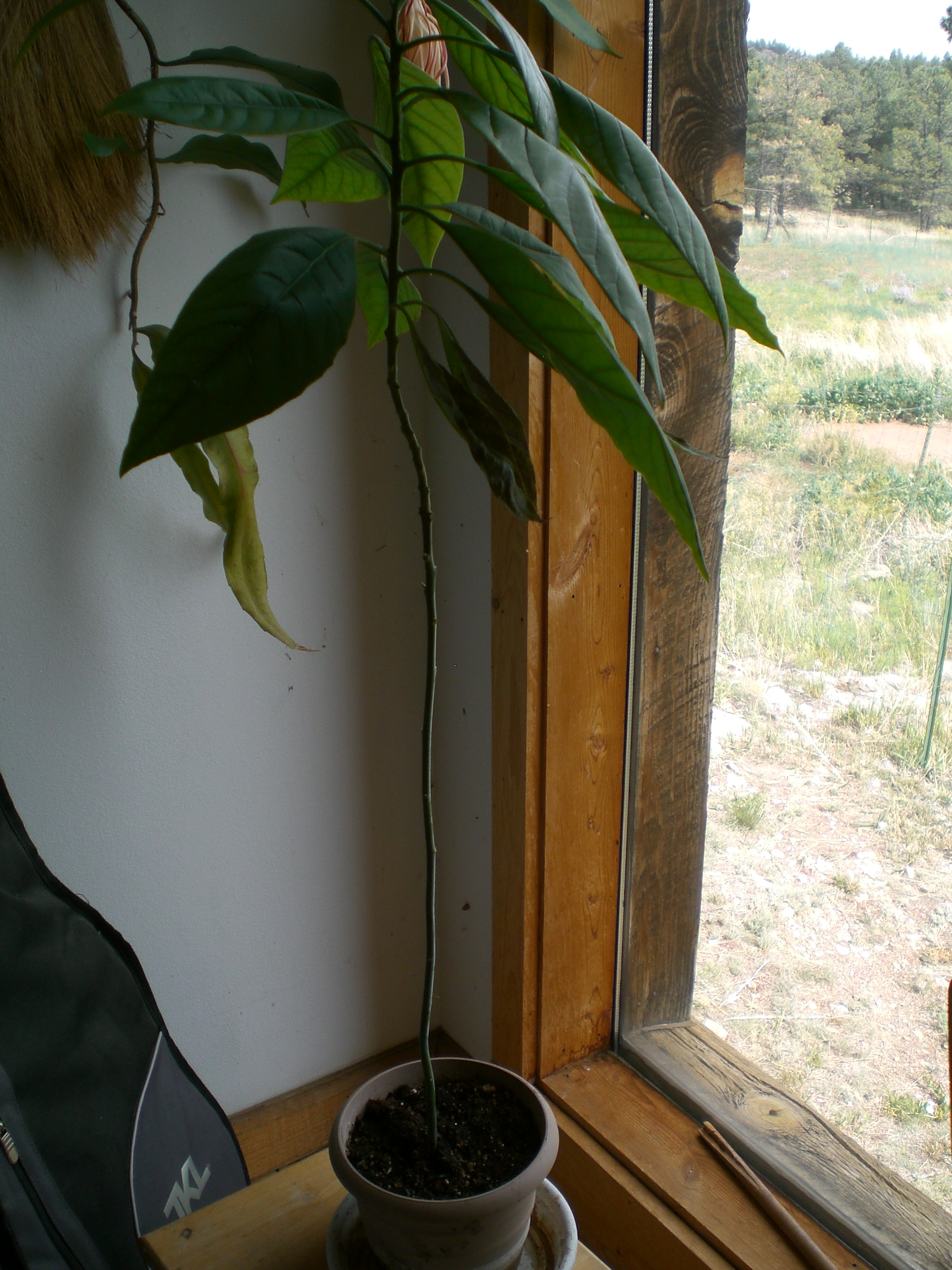
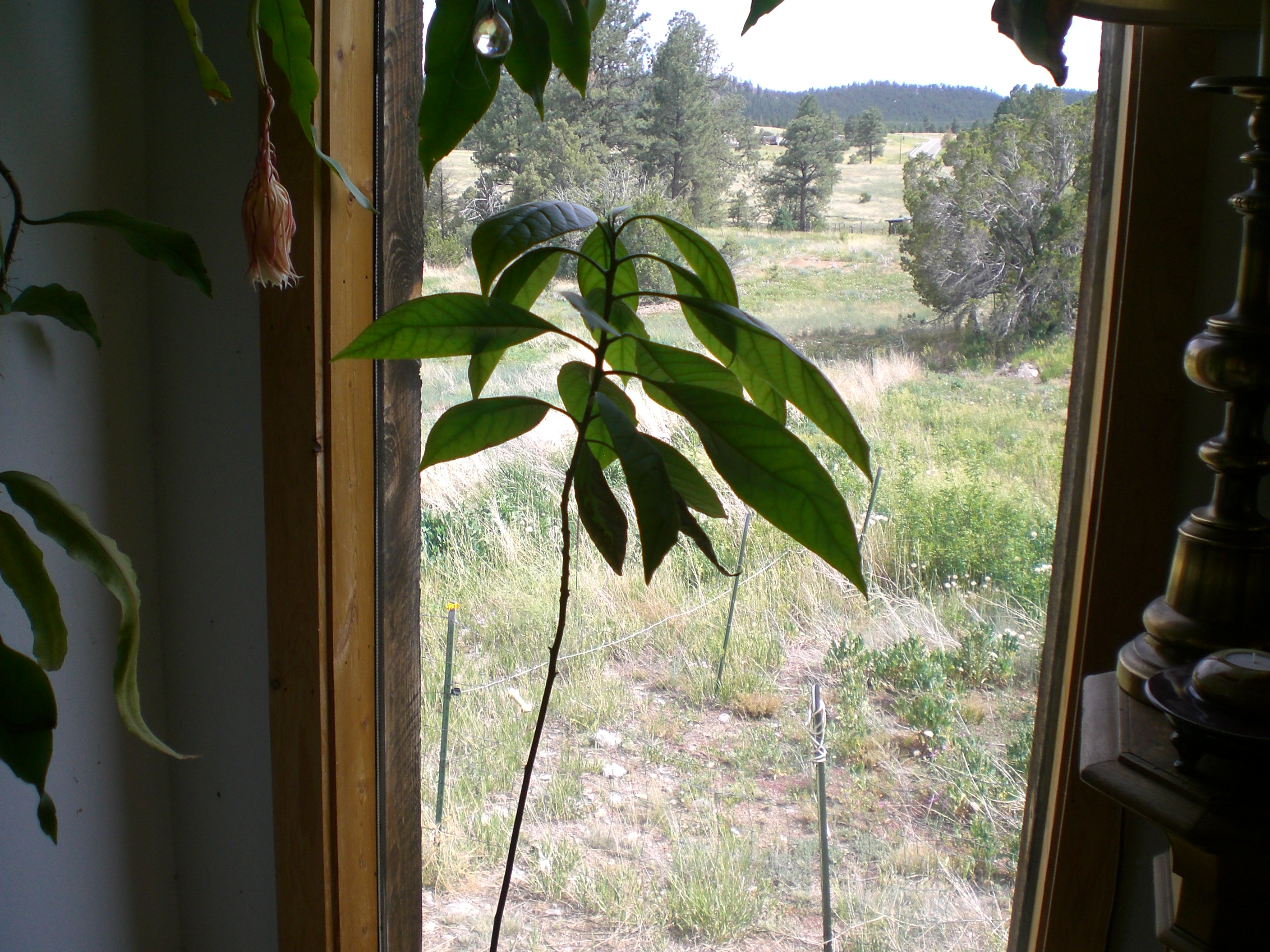
“I planted an avocado pit about 8 months ago, that had cracked open and put forth a small shoot as it sat in water on my kitchen window. In its pot of earth in the living room, it slowly grew, putting out a single leaf, sometimes two, which would drop off before new ones emerged. This pattern went on month after month. The plant became taller, more mature, but never fuller until just last month when it began producing new leaves without losing the original ones. Now it is both taller again, and sporting a head of 15 leaves. It is still a young avocado tree but it is nonetheless quite a different plant than it was 4 weeks ago.

avocat1

“Months of patient, repetitive experience (in my case years of it) have given way to a different look, a more fulfilled form, changed and more expressive energy, a happy presentation of what it is to be an avocado tree me… My energy level has escalated such that my daily being is much more productive. Next, unanswered, question – is happiness the result of that increased productivity, or the energizer which makes the productivity possible – or both?

“I’m pretty sure I won’t be puzzling over the answer any time soon. I prefer to focus on putting out more leaves.”

Leaves which I will share as they manifest.

 CIMG2428

Lemon Delight

June 1, 2014

Fixing myself a salad supper using Belgian endive and lemon flavored olive oil, I flashed back to the first time I was offered this salad by the housekeeper employed by my parents, in Paris. Francine had worked in a large hotel most of her life, and had quite a number of stories to tell about life under the German occupation. Some were funny, others distressing, like the one about her desperately hungry coworker who was whipped for eating two bites from the discarded remains of an apple she found on a supper tray set out into the hall.

Francine is also the person who first began to teach me patience, how to mask my reaction to a situation and to bide my time until I could find a safe and effective way to retaliate. In different terms, she taught me to convert reaction into response.

My friend from Cameroon describes the French, who ruled his land for decades – as part of French West Africa – as duplicitous people who mask what they really mean behind polite phrases. He has gently scolded me for being “like the French” when I ask what he would prefer in a situation, rather than state what I think and then ask his opinion of my proposal. At first I was puzzled by this interpretation, since in my own mind I was genuinely neutral, and willing to do whatever he wished. Now, I’ve adapted my communication, to state that I have no preference among several options and would like him to choose for us both.

I’m still learning, in other situations, to feel comfortable openly asking him for what I would like. A lifetime ago, a mentally ill mother who took pleasure in denying me anything I wanted, set me on a path of masking my desires. Francine refined my skills of indirection. Time, experience, life as it happens all combined to instruct me to accept and be happy with what I could get, rather than to demand the fullness of what I wanted.

There is value in patience, in being tactful, in making lemonade from lemons.

Scent of Lemons   by Janet Triplett

Scent of Lemons
by Janet Triplett

But there is also a time for a serving of lemon meringue pie!

I’m savoring my slice just now – a demanding but satisfying job as the (gluten-free) crusty base, a delightfully sweet/tart lemony balance of romance and a social life for the filling, and a meringue topping of frothy happiness and spiritual delight.

There. I’ve said it. That I have what I want.

In the saying, I am confirming my right to this happiness, rather than daring fate to snatch it away from me in the way that, so long ago, my small pleasures were demeaned or destroyed.

How very long it sometimes takes to undo negative conditioning! Especially when that training wears the face of positive qualities like acceptance, patience, diplomacy, tact.

My spiritual teacher, from MasterPath, speaks of iron shackles and golden chains being equally binding. The shackles are clearly negative and therefore easier to identify and shed. The golden chains are so subtle and seemingly so benign. But oh, how constraining they can also be.

I feel blessed, to become able to perceive and free myself from them. I thank Thee, Master, for showing me the way.

When Life Gives You Lemons

April 13, 2014

Ah, the wonders of modern reliance on connectivity!

I had set aside an important three hours on Friday morning, to enter client assessments into the data base system on which my job relies. Guess what? Not only could I not connect, the entire system is down. The only way I can complete any aspect of my work is by telephone – calling into the IT number from time to time, to learn whether the massive problems have been solved. With several thousand employees disbursed across the large state of New Mexico, there is no way – apparently – to alert all of us to a change in status.

Disaster preparedness lessons are certainly now being scheduled.

One of my duties as a Care Coordinator is to educate the clients on my caseload about disaster preparations – to help them think through where they will go if they must evacuate, what they need to have ready to take with them, how they will have their needs met in a new location, etc. The area where I live – and across which my clients are scattered – has been in severe drought for close to ten years, with this past winter being one of the driest on record. Spring is showing in town as forsythia flowering, but looking out my window I see only the dry brown of parched end-of-summer. Driving into the nearby mountains yesterday, there was no hint of green on bare branches of scrub oak, which should already be leafed out.

Like most of my neighbors, I watched TV news of feet of snow being repeatedly dumped on the Midwest, and wondered why the prevailing winds could not let some of that moisture drop on us here, rather than sailing by, overhead. Surely the scientists who can put a man on the moon can figure out how to redirect moisture flows here on earth and distribute needed water more evenly!

When will those individuals supposedly concerned with the nation’s welfare stop bickering about the reality of climate change in the abstract, and focus instead on solving the very real problems of weather extremes being experienced right now? These extremes are causing disasters of varying sorts, every season. That is a fact, not an abstract.

Does it matter whether one believes or not that there are major, impending climate alterations for which mankind is responsible? Not at all, if the priority is to address the very real drought – and the equally real polar vortex – being experienced in different regions of our country.

Stop bickering, and just fix it, already.

Meanwhile, it’s an interesting experience to observe a huge non-profit brought virtually to a standstill for an entire day, because somehow its computer networks have failed. I don’t know as of this writing whether it’s the servers themselves, or access to the Internet, or some other issue that prevents us from emailing one another, or using any of our data base systems. I only know that it is obviously dangerous to build a service delivery system around an expectation that all information one needs to perform ones job can be accessed via the computer.

I’ve ranted here before on the limited vision of techies who build their systems in the midst of large cities with good Net access, and who then expect those of us living in the mountains and “on the frontier” to be able to use those systems. I have to admit I’m perversely glad that serious problems have arisen today right in the center of New Mexico’s largest city. Maybe now, the voices of those of us who are frontier people will be heard!

Maybe now, as well, local stores will consider making the ability to do simple arithmetic and to give change a job requirement once again. They’ve had to shut down serving customers when we’ve had power outages that turn off the cash drawer calculators. Oh, that’s right, the store’s inventory tracking is based within those calculators, and heaven forbid they make a sale that isn’t tracked. After all, doing business is about making money, not about serving customers – right?

Inability to distribute food or other essential goods because the power is off, or the computer is down – now that is a recognizably man-made disaster! No need to get into the debate about man’s contribution to the current climate extremes being experienced – just look at the many local mini-disasters we most certainly cause by ignoring the fallibility of our mechanical creations. Millions of vehicles recalled, dams that crack and flood, power grids that rupture… Haven’t we collectively figured out that if it can be built, it can fail?

No, I guess not. So today I don’t work as expected. Or rather, I will schedule extra clients to visit, collecting information in an old-fashioned, hand-written file folder. Whenever the technical problem is fixed, I’ll have a backlog of data to enter – as will many of my co-workers. I do hope the upsurge in computer usage doesn’t cause a new crash! Is that potential disaster being planned for, as the current repairs are undertaken? We’ll see.

Meanwhile, if the present computer problem isn’t fixed before Monday, I’ll actually have a whole weekend off, for the first time since January 1.
Make lemonade.
Drink lemonade.
Enjoy lemonade.
YES!

Driving into Awareness

April 6, 2014

I am teaching someone to drive – again – no, I am again teaching someone to drive. There, that’s better, more accurate.

The same process of correction, of attention to exact explanation is required of me as the driving teacher (not driving the student hard, but teaching the student the art of driving). And it is as much art as science. Getting the feel of the vehicle, of the wheel, of how the car wants to straighten itself out from a turn so that trying to do the straightening produces an over-correction. Learning to position oneself in the lane, noticing important warnings of the intentions of other drivers, processing what one sees and hears without needing the time to consciously think it all through. Driving, especially in traffic, requires quicker responses than conscious thought permits.

I am, again, teaching someone to drive, and valuing this opportunity to become conscious of what I do instinctively. Valuing, also, this occasion to notice not just what I do right, but what I’ve gotten a bit sloppy about, and don’t want to continue to do, now that I need to be a role model of safe, defensive driving.

My daily spiritual practice is essentially an exercise in shutting down thought, in order to become aware of the subtler levels of my being. Very close to what I must do to teach someone a skill at which I am so practiced that I conduct the activity beneath the level of awareness and thought. When I come out of my daily contemplation, I often bring a new insight with me, into consciousness, then do my best to put into words and actions what I’ve been gifted to perceive. Very much like the way in which I am opening to the subtle habits ingrained by so many years of driving, and attempting to give voice to them in order to instruct my student.

So teaching someone to drive is a spiritual exercise! Or at least it can be, if one chooses to make use of the experience for one’s own growth in understanding. And in patience. And in trust.

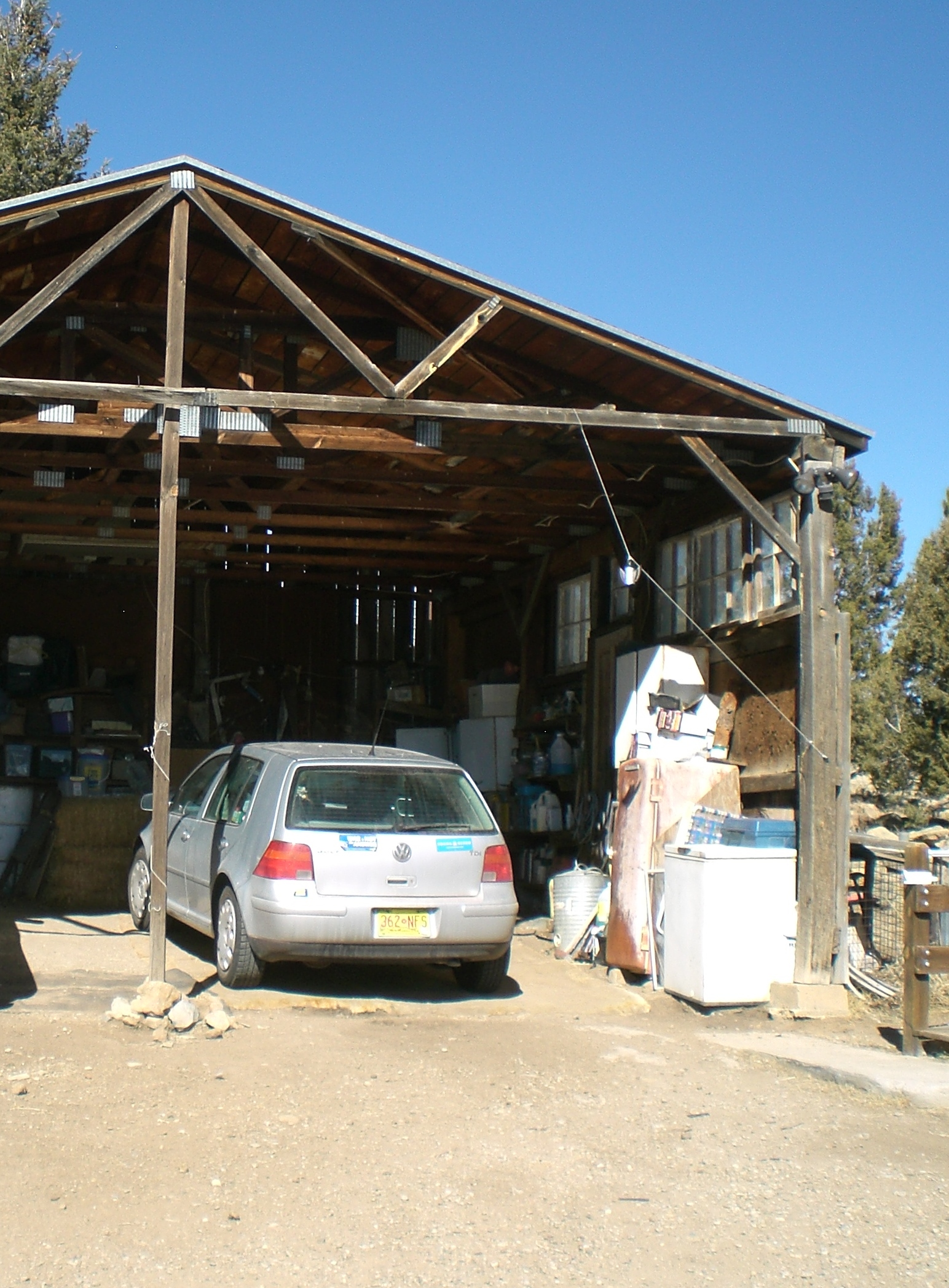
The vehicle being used is my ‘second’ car – the back-up GMC that serves as my guarantee of transport should my trusty and trusted and much loved VW Rabbit ever fail me. (It has not done so, as yet, in ten years and nearly 220,000 miles of mostly solitary driving). I’ve realized already that I would be far more tested were I to be giving the lessons in the Rabbit. Not just because it’s a stick shift whereas the GMC is automatic. I have virtually lived in the VW; it’s packed with all that’s necessary for me to survive through a snow storm, hunker down to wait out a dust storm, take advantage of an unexpected opportunity to camp out overnight, be appropriately dressed for sudden changes in weather, provide roadside first aid in case I come across an accident… you get the idea.

Resting at Home

Resting at Home

My Rabbit has become far more than reliable, reasonably inexpensive transportation. It’s home away from home, an important means of connecting me to the world, a key element of my ability to earn my living and, because Rabbits remain relatively uncommon on our roads, a distinguishing mark of my presence. Not so long ago, I needed to let a mechanic drive the Rabbit so he could feel in the steering what I sensed was a developing problem. Sitting in the passenger seat as we went around the block was one of the harder things I’ve done recently.

Sitting in the passenger seat of the GMC has not been difficult. I don’t have much history with the Envoy, and my student is both a quick learner and a careful driver. The challenge for both of us is that he grew up using public transportation, not riding in cars, so he still has to acquire the non-verbal, body sense of what driving a car is all about. It’s not at all the same as riding a motor cycle, which he has done.

I’m also familiar with riding cycles – not driving them, but happily sitting on the back, free to enjoy the wind in my hair and the scenery flashing past with an immediacy totally lacking when one is shut inside a car or truck. I used to get the same sense of connection with my surroundings when I rode my horse out through the gate of my property and into the extensive acres of my neighbor’s ranch. A brisk canter to the far fence shut down thought and opened up my inner world. Yet another form of spiritual exercise.

Perhaps I should suggest to my student that he do a short contemplation before his next turn behind the wheel? Most physical skills come more easily when one relaxes into them (think of learning to float in order to swim). Those same skills suffer when one over thinks them (tensing up in the water, and sinking). Riding behind on a motorcycle, one has to relax and let one’s body bend with the curves in concert with the driver. Up on a horse, one must become one with the rhythm of the horse’s gait. Behind the wheel of my Rabbit, I feel in tune with every nuance of the vehicle, I know that car as if it were alive.

How does one teach that sort of awareness?

Hearing one’s True Voice in contemplation and then living from one’s Divine Self are, like driving a car well, skills which cannot be mediated through the mind. These skills cannot, therefore, be taught. They must instead be caught by the student, who first observes them being modeled by a teacher and who then, by trial and error experience, learns to shut down the mind and respond from a wise and capable Soul.

Inner commune, connection, inspiration, followed by action – the sequence of a spiritual exercise – is also the sequence many artists describe as their process of creation. Learning dance choreography many years ago, I was told by Miss Widener to stop thinking about my composition and instead to just feel my way through it. Yesterday I asked my student if he could feel how to respond to the impact of wind on the Envoy’s steering. Today I am challenged to create, with words, a feeling of intuitive understanding in my readers.

Do I evoke an “aha, yes, I am aware of that part of me?”
Do you go there, learn, trust, respond, live from that core? Yes? Then I’m happy for you.

If not, or not yet, teach someone to drive – or ride a bicycle, redecorate a room, weave a rug, or work with wood. As your student learns a new skill, you’ll gain a new level of awareness, and enjoy a new way of Being.

Letting the Wind Blow Through

February 15, 2014

A friend just mentioned he’d enjoyed my reflection on snow, bringing to mind the gorgeous silence of that recent morning, a stillness in dire contrast with the roaring, shaking, blustering, hollering wind blasting my home tonight. Gusts over sixty miles an hour have been hammering at us for five hours now; fortunately the general temperatures were warm enough today that the blasts are not unduly chilling. At least not chilling in temperature. But those who are made uncomfortable by wind can find our New Mexico spring weather intimidating. Tonight’s blasts are not unusual. A little early in the year perhaps, and lasting later into the night than normal, but very familiar nonetheless.

When I was fifteen I wrote a poem about standing up to wind, not a very good poem though the underlying thought was worth the effort. It had been triggered by standing on the edge of a precipice, at Les Baux in southern France. The town sits atop what here in the southwest we’d call a mesa, overlooking a broad plain called the Val D’Enfer. Reputedly the Dark Ages lords of Le Baux forced trader traveling through the valley to pay tribute – often exorbitant tribute – for safe passage, making the traversing of the plain a veritable descent into hell. My poetic effort attempted to recognize the strength it takes to stand up against a powerful wind, and the strength it took for travelers to risk passing near Les Baux.

I’d prefer more quiet tonight, to assure a better night’s sleep. It’s been a very long, productive but tiring day. If wishes were horses, beggars would ride… so says the adage that echoes in my mind wherever I let myself dwell on what isn’t. So instead, I’m using the blasting wind as a motivator to write this week’s post. We’ll have to see how the essay turns out! Smooth and slick, or choppy and irritating? The wind is both at once – will my essay mimic the wind, or express its essence?

“Love me, love me, say you do.
“Let me fly away with you.
“For our love is like the wind,
“And wild is the wind, the wind,
“Wild is my love for you.”

The most recent theory, from a study in Germany, of why older people take longer to respond to memory tasks, is not that ability fades with age but rather that there is so much more stored in an older person’s brain, it takes longer to sort through everything to find the relevant bit of information. I like that explanation, not just because it is more flattering. I like that explanation because it takes into account all the bits and pieces of song lyrics, like the one above, that pop out of the storage cabinet at mostly – but not always – appropriate times.

Say the word English, and I’m apt to begin quoting, “Her English is too good,” he said, “which clearly indicates that she is foreign. Whereas other people are instructed in their native language, English people aren’t.” And on and on, in Rex Harrison’s voice. I learned the entire performance of My Fair Lady when I was eight. Don’t ask me why, and don’t ask me why it’s still all there in the lumber yard storage of my brain.

That’s the term that was used, disparagingly, by the wave of neurologists who discarded “old” brain storage theories in favor of computer-link images that propose an entirely different set of rules for how our brains perform our thinking and memory functions. That new set of rules is the one that posited an eroding of capacity with age. One more reason I stand in opposition to all the supposedly “better” connectivity and computer-based emphasis of our “modern” world.

Inventors create a new toy and suddenly scientists see everything through the lens of that new technology. Wisdom of centuries is derided, practiced ways of relating to the world and to one another are treated as out-of-date. All theories, all explanations must fit the new paradigm.

Until a brave soul stands up and says “no” to forced conformity to what is new. Until a study from Germany says older brains are just as efficient as younger ones, but they have more data to process, more varied possibilities to consider, and so take longer to come up with answers. Until I suggest to a friend, who has been angered by a phone call wakening him at 3AM, that he can, in fact, turn his cell phone off when he wants to sleep.

What a novel idea to the ethos of today – to be disconnected!

In the midst of the wind storm, I am barraged with sound. Fortunately, I know the storm will pass and it will become quiet again. I really can’t conceive of living in the middle of a non-stop gale, any more than I can relate to those people who live constantly connected – mobile phone always on, always at hand, computer permanently turned on with multiple pages open, Youtube, Facebook, LinkedIn and Skype all demanding attention.

There are reasons to be available to others. If one is living far from home and family, computer connections bridge time zones and allow relatively inexpensive contact. The nature of my present job is such that I must be reachable in emergencies. That doesn’t mean all clients can call me twenty-four hours a day, however. They call a central, toll free number for triage. Only the true emergencies are put through to me in the late, or early, hours of a day.

Connectivity, like the wind, has its season. I do hope that before the passing of all those of us who have lived when (or where) there was not a phone in every home, those born to the age of connectivity will have tired of disrupted sleep and life in a fishbowl. I do hope for an opportunity to teach the continuing values of concentration, of solitude, of silence, of windless days and of attention to one thought, one person, one experience at a time.

*****

Awakening this morning, I first register the silence. The storm has passed, the wind abated. A new day, and new environment surround me. I appreciate the renewed quiet, the ability to focus inward before joining the network of souls who will make up my work day. And I’m happy to think that, now that a research study has been published which respects older brains, perhaps some of the thoughts and beliefs dwelling in those older brains will also be given new respect.

Wouldn’t that be a novel and pleasant experience!

A Snowy Contemplation

February 9, 2014

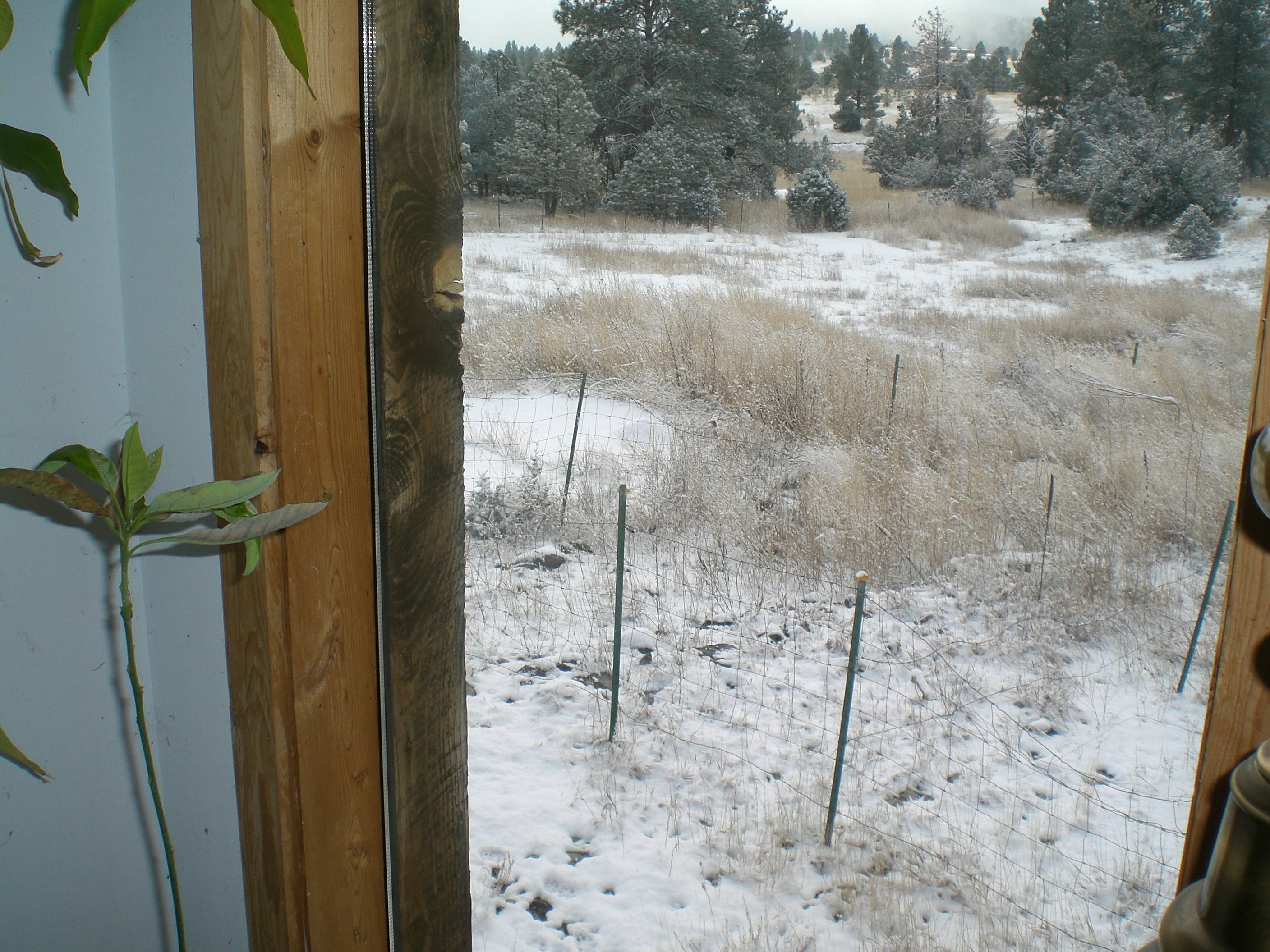
Have you noticed the unique silence that accompanies a fall of snow? The white blanket covering the ground somehow muffles ordinary noises of a country stillness, so that the world is – for a short time – truly quiet. I see birds at the feeder, fluffing themselves to shake dampness off their feathers, but they are not noisily jostling as they were yesterday. Even my dogs lie in, enjoying their heated porch rather than running barking at the rising sun.

From my Window

From my Window

Not much snow fell, not much more than a promise of wetness to our parched land. But the sky is still grey, except where the rising sun has broken through a cloud bank to paint a few slashes of peach and gold. Perhaps a few more drops will bless the earth from the clouds in the west. That is the direction our winter wetness comes in from. In summer it is often the reverse – systems stretch up from the gulf off Texas to give us summer rains. This past year, Texas did not share, and after a good start in late fall, the weather gods have chosen to send all the moisture either north of us into Colorado, or farther east where the blizzards and cold have caused major havoc.

Have you noticed how people’s temperaments are affected by the climates in which they dwell? It is an almost universal truth that cultures in hot, wet environments become gregariously noisy, even in Asian regions that one tends to think of as possessing a pattern of restraint. The silence of traditional Japanese people passing each other in public (it snows in Japan you know) is vastly different from the voluble street harangues of Vietnamese pedestrians in a country where the difference between hottest and coldest weather is less one of temperature than of moisture – monsoon season, or “dry” season when the humidity is perhaps 60% rather than 85%.

I knitted my first sweater in Saigon, when I was fourteen, and wore it twice on “cold” dry season days. Not days really suited to wearing a sweater, but I did so want to show it off. By the time I arrived in a cold enough climate to need a sweater, I’d outgrown it. A pretty dark cherry red pullover, with cap sleeves and a mini-turtleneck, the sweater went with me on to college and to Boston and eventually here to the desert, where I finally gave it to the daughter of a friend to be worn during what used to be our very coldest weeks of January. Used to be – it got down to 30 below at night and not much more than 5 for a daily high over at least a couple of weeks each January, even as recently as 20 years ago when I moved to my present home. For the past ten years, the night time temperature here has not dropped below minus 10, and the sun has warmed us comfortably every day. Pleasanter living than the mid-west’s polar experiences, but dire for our drought.

A snowplow has been by, and the school bus’ flashing lights indicate it has picked up my neighbor’s boys. I see cars making their way down the road that curves toward town, heading into the start of another workday. But still it is silent here around me, in a way only snow produces. It won’t last, neither the silence nor the snow, so I cherish it.

Have you noticed how people’s expressions of temperament change with their circumstances? A man courting a woman asks cautiously will she do this, would she help him to do that. Having won her, he issues orders – we will do this now, you must do that. The woman still has choices. She can simply agree, or she can learn in what way to express her own preferences so that she is heard. It is not significantly different in non-traditional relationships – we learn each other’s ways of being and how to express ourselves to influence the nature of the relationship. We learn how to help one another grow, and sadly, we also often learn how to block or stifle one another in an expression of frustrated, never-outgrown teenage envy.

Have you noticed how, entering a new relationship, there is a tendency to ask oneself, “Should I trust this person? How far? With how much of the truth about myself?” Past personal history of support or betrayal, extent of confidence in one’s self, willingness to risk, curiosity about different life styles, what a friend of mine simply calls open-mindedness, can all blend together into a force that shapes how a relationship develops. That is the common way.

How differently the issues of trust, of exploration and communication and growth of understanding unfold, if one considers a new relationship from the perspective of why the Divine ( God, or Fate, one’s Master, one’s karma, one’s wise inner self, or a Higher Power) “has brought this person and this experience to me at this time.” All the ambiguities of trusting in another person are released to the trust that we are alive for a reason, and that we can understand that reason, learning and thriving in our understanding.

Like the rare silence of a snow-covered early morning landscape, achieving an understanding of ourselves in relationship is a blessing. The moments of silence are brief; I woke early to enjoy them. The opportunities to intuit “what we’re here for” are also brief. I wake early to contemplate them.

The line of cars I see driving to work has warmed the thin snow covering on the road, and it is already turning to splashing slush. My big dog is out and barking to let the world know he has started his new day alertly. His two little companions romp patterns into the snow of my long, curving driveway. Outside, and in, the world is no longer silent. A new day of life has begun. What will I learn? What will I hear? What will I come to understand? What will I teach? What will I give, and what will I receive? Soon enough, I’ll have answers. Soon enough, too, I’ll have another opportunity to practice trusting that what is, is so, for a reason I may or may not be able to fathom. In trusting, I live. To cease trusting would be death – and I’m a long way from ready to die!

Across the Pasture Gate

Across the Pasture Gate

Another wave of snow clouds is sweeping in, flecks of white are drifting across the window. I will delay, just briefly, starting my own work day. Because I can do so, I choose to savor for a few moments more the regained silence (dogs still, birds quiet, no cars passing on the road), the blessing of extra drops of precious water, and another opportunity to consider why I am where I am, and for what inner purpose my outer life has taken on its latest form. Thank Thee, Master, for these gifts!

Friends

February 2, 2014

There is nothing intrinsic to my speaking French that excludes women.

There is something significant to the pattern of my friendships, which were primarily with males until I was well into my adult and professional life.

I had one close girlfriend as a small child – Sara Harwood – whose family moved away from Washington DC when I was about nine. I ran away ten blocks to her house after one particularly horrible encounter with my mother. Her mother sat me down with milk and cookies, listened to me, then called my home to say I was invited to spend the night with my playmate. The next day Sara’s mother drove me home. I have no idea what she said to my mother – but nothing changed in how I was treated.

I also played with a neighbor – Keith Fleming – until my family moved away from Washington DC when I was twelve. Keith had a wonderful playhouse her father had built in their back yard. We were both only children; neither of our families was comfortable with the other, limiting our interaction to the hours we spent building fantasy lives in the playhouse.

From the time we moved to Vietnam, as I turned thirteen, I was a loner – or had friends who were boys and, as I grew older, a sequence of boyfriends. I missed out on slumber parties. Not allowed to attend, and my mother steadfastly refused to take on responsibility for anyone else’s children so I never had friends over to visit in my home. Without the opportunity to reciprocate, I became uncomfortable spending time in other homes, reinforcing my loner path through my teens.

In the arms of the Leper King - Angkhor Wat

In the arms of the Leper King – Angkhor Wat

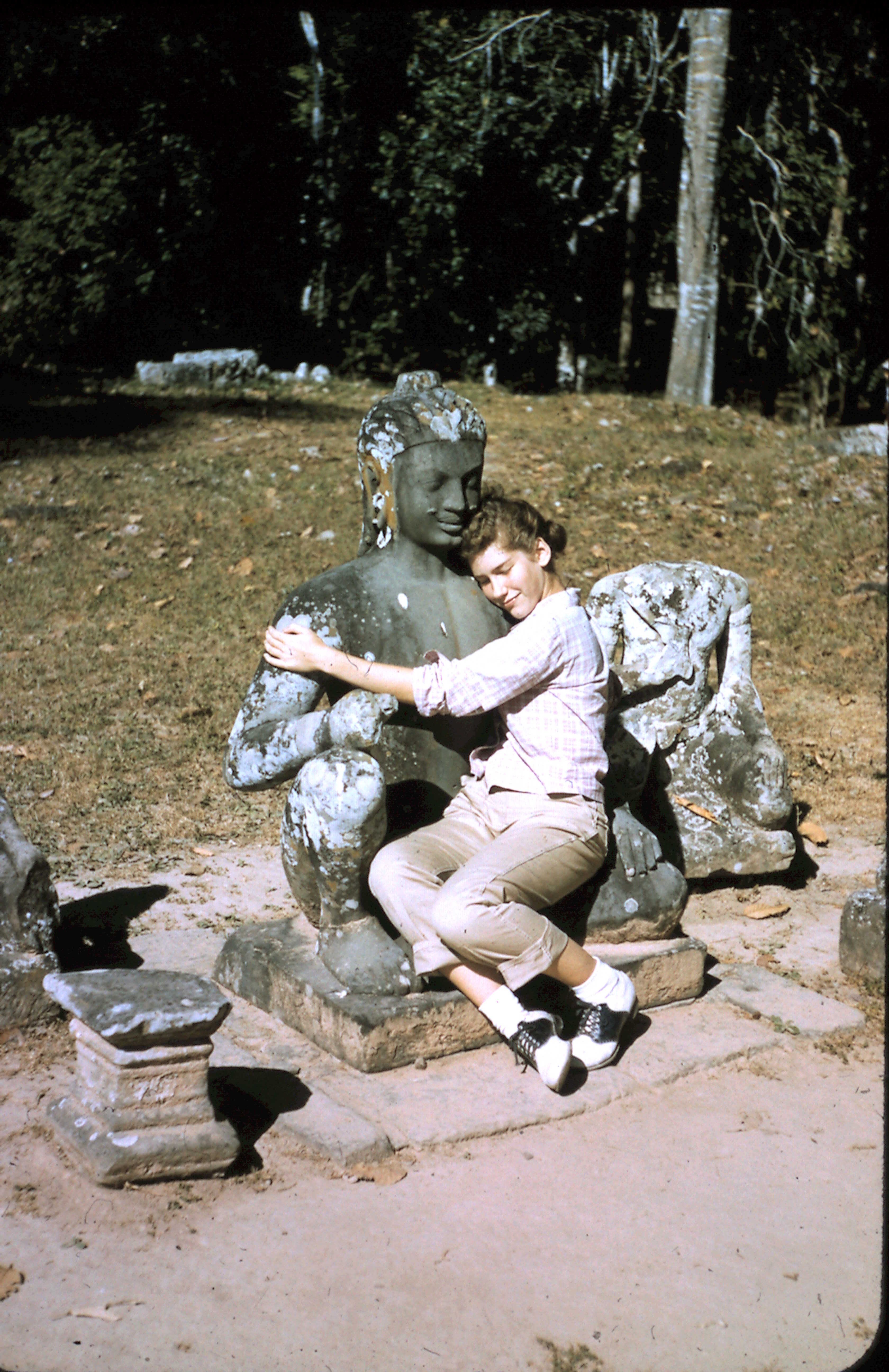
Undoubtedly the difficulties of life with my severely emotionally disturbed mother produced subtle bias against forming relationships with women. By contrast, I received affection from the one grandparent in my life – my Grampa – and at least intermittently from my father. Not surprising, therefore, that I was more comfortable with boys than with girls – and consequently not surprising that my memories from my French-speaking life are of interactions with males.

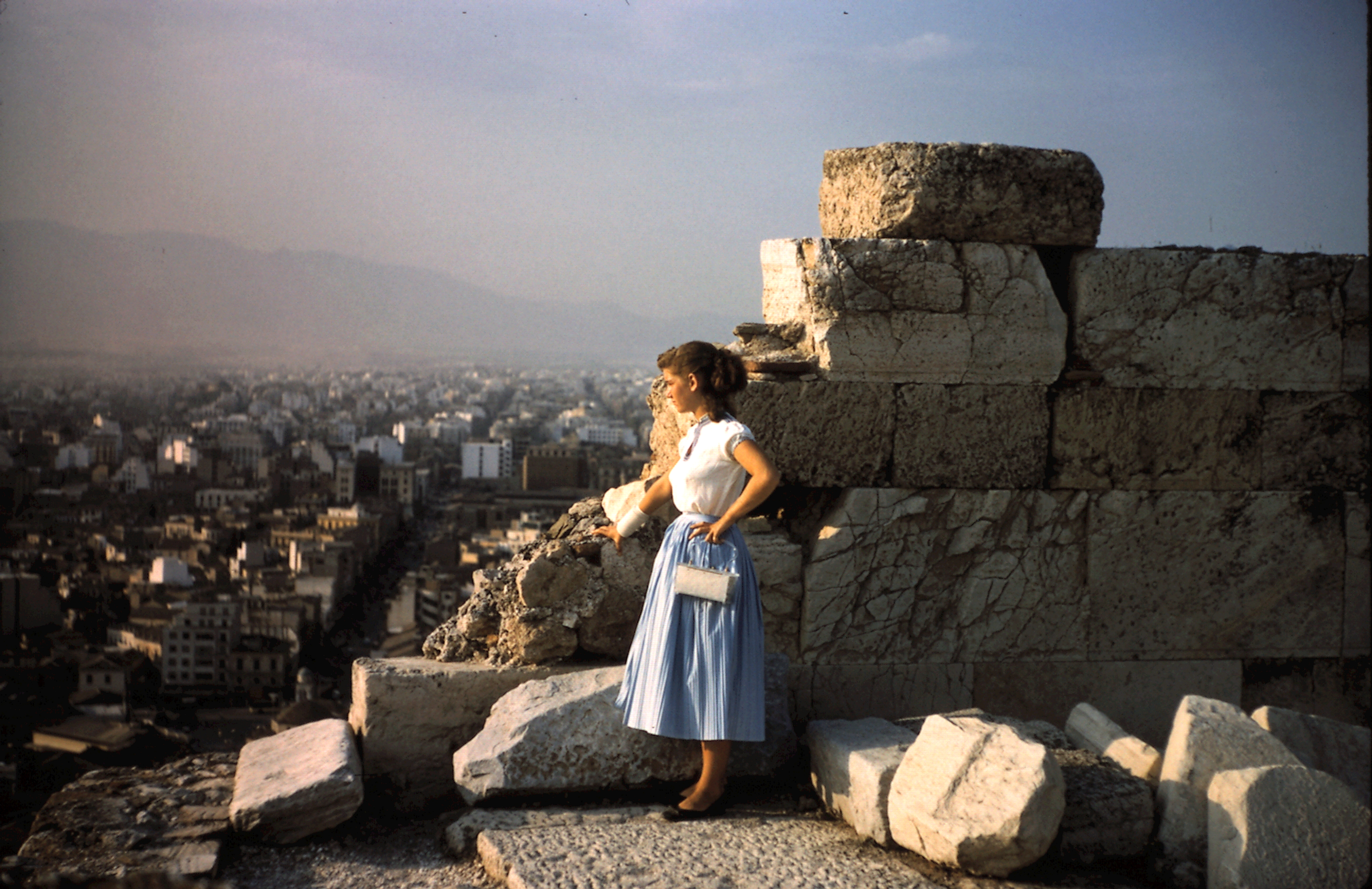
Overlooking Athens

Overlooking Athens

Not surprising either – perhaps – that for much of my early career I worked in male-dominated areas, encountering relatively few women from amongst whom to find friends. Clinical research in Boston, employment testing and then wildlife management planning in Santa Fe, then teaching in the New Mexico penitentiary… surrounded by men, in some cases the only female professional in the group. It wasn’t until I reached my mid-thirties that I developed close friendships with several women. Interestingly, they remain my friends today – thirty some years later. So once the barrier came down, friendships with both sexes became my norm.

Sivan at Mesa Verde

Sivan at Mesa Verde

Come to think of it, those first friendships with women had a common thread – all of us had had difficult relationships with our mothers. We were mature enough to not feel the need to vie, as teens so often do, for “who had it worst” (or best, or easiest). Absent that competitive tone, we could learn from each other and bond over our shared solutions to the psychological slings and arrows we had endured. Just a week ago, one of those friends commented to me that she’s always thought of me as sexy although she’d never mentioned the trait to me. I am surprised – it’s not at all how I think of myself, although I do enjoy and embrace that aspect of life. Reflecting on her remark, I realize that there is still a corner of my psyche that accepts my mother’s strictures against behaving improperly – i.e. in a sexual manner. And believe me, she saw sexual innuendo everywhere!

A meal with Leon at San Felipe

A meal with Leon at San Felipe

I don’t. And where I do see it, I am not offended nor embarrassed, nor do I think of myself as improper because I enjoy all aspects of my being. My female friends, I suspect, do the same, though that is not a subject we’ve found it necessary to discuss. Instead we talk about our careers, balancing personal with professional life. We share excitement over new endeavors, and commiseration over frustrated aspirations. And, with those who are, like me, followers of MasterPath, we share the outward manifestation of our inner spiritual discoveries.

It no longer seems to matter to me if a friend is male or female – the nature of the bonding remains the same. Shared values, interest in new aspects of life, finding ways to be useful and to be appreciated, these are my building blocks for any constructive relationship. I’m pleased to know that my early misdirection away from females has been overcome; now I just need to encounter some French-speaking women to bring full balance to my language-dictated relationships.

A happy Khin

A happy Khin


Only Fragments

Love Letters to the Tar Pit

KarusaaVerse

Words that Sparkle, Thoughts that Ignite: Fueling Your Imagination

Leaf And Twig

Where observation and imagination meet nature in poetry.

Millarson Diaries

Personal Musings and Thought Experiments

The Beauty Along the Road

Discovering Beauty in the small details of our lives

Flowerwatch Journal

Notes on Traveling with Flowers

1eclecticwriter

Wide-Ranging Commentary

Spirituality Exploration Today

Delving into the cross roads of rationality and intuition

smilecalm

Life through Mindful Media

A Good Blog is Hard to Find

I will shatter a word and scatter the contents into the wind to share it with the world.

Ray Ferrer - Emotion on Canvas

** OFFICIAL Site of Artist Ray Ferrer **

AKA The Versatile

Fashion | Lifestyle | Food & Travel | Beauty | Fitness | Education | Product Reviews | Movies | Doodling | Poetess

Aging Abundantly | Women Over Fifty | Empty Nesters | Caregivers | Aging Gracefully

Finding Joy at Every Age with writer/philosopher Dorothy Sander

ARTZZLE

Helping with the Pieces in Life's Puzzle of Art and Design

Project Light to Life

A bucket list blog: exploring happiness, growth, and the world.

The Daily Post

The Art and Craft of Blogging

Any Shiny Thing

MIDLIFE MAGIC

allmostrelevant

@allmostrelevant

The Irrefutable Opinion

Assaults on the Casually Mundane by K. Jean King