Posts Tagged ‘My Life’

Friends

February 2, 2014

There is nothing intrinsic to my speaking French that excludes women.

There is something significant to the pattern of my friendships, which were primarily with males until I was well into my adult and professional life.

I had one close girlfriend as a small child – Sara Harwood – whose family moved away from Washington DC when I was about nine. I ran away ten blocks to her house after one particularly horrible encounter with my mother. Her mother sat me down with milk and cookies, listened to me, then called my home to say I was invited to spend the night with my playmate. The next day Sara’s mother drove me home. I have no idea what she said to my mother – but nothing changed in how I was treated.

I also played with a neighbor – Keith Fleming – until my family moved away from Washington DC when I was twelve. Keith had a wonderful playhouse her father had built in their back yard. We were both only children; neither of our families was comfortable with the other, limiting our interaction to the hours we spent building fantasy lives in the playhouse.

From the time we moved to Vietnam, as I turned thirteen, I was a loner – or had friends who were boys and, as I grew older, a sequence of boyfriends. I missed out on slumber parties. Not allowed to attend, and my mother steadfastly refused to take on responsibility for anyone else’s children so I never had friends over to visit in my home. Without the opportunity to reciprocate, I became uncomfortable spending time in other homes, reinforcing my loner path through my teens.
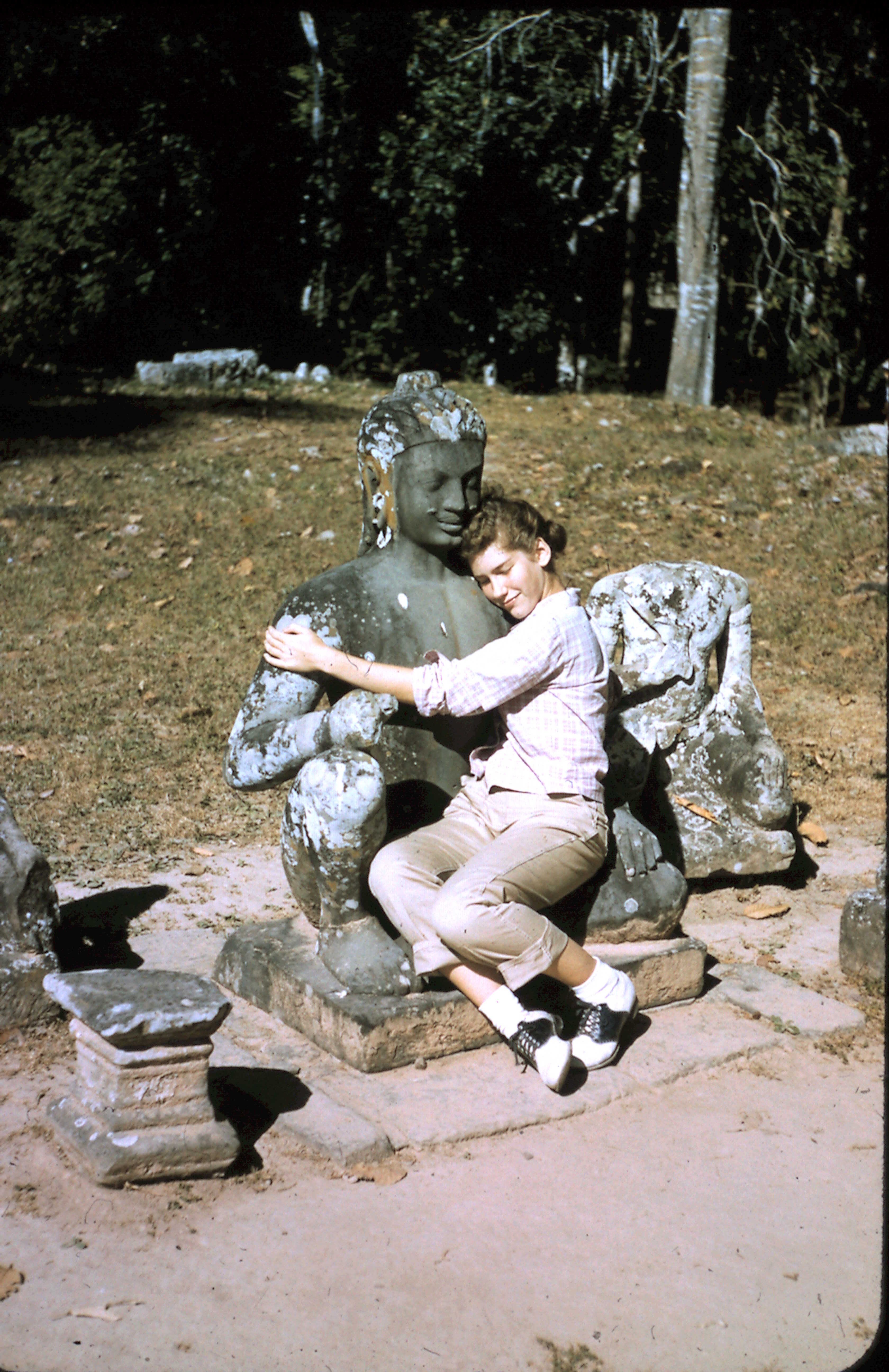
In the arms of the Leper King - Angkhor Wat

In the arms of the Leper King – Angkhor Wat

Undoubtedly the difficulties of life with my severely emotionally disturbed mother produced subtle bias against forming relationships with women. By contrast, I received affection from the one grandparent in my life – my Grampa – and at least intermittently from my father. Not surprising, therefore, that I was more comfortable with boys than with girls – and consequently not surprising that my memories from my French-speaking life are of interactions with males.

Overlooking Athens

Overlooking Athens

Not surprising either – perhaps – that for much of my early career I worked in male-dominated areas, encountering relatively few women from amongst whom to find friends. Clinical research in Boston, employment testing and then wildlife management planning in Santa Fe, then teaching in the New Mexico penitentiary… surrounded by men, in some cases the only female professional in the group. It wasn’t until I reached my mid-thirties that I developed close friendships with several women. Interestingly, they remain my friends today – thirty some years later. So once the barrier came down, friendships with both sexes became my norm.

Sivan at Mesa Verde

Sivan at Mesa Verde

Come to think of it, those first friendships with women had a common thread – all of us had had difficult relationships with our mothers. We were mature enough to not feel the need to vie, as teens so often do, for “who had it worst” (or best, or easiest). Absent that competitive tone, we could learn from each other and bond over our shared solutions to the psychological slings and arrows we had endured. Just a week ago, one of those friends commented to me that she’s always thought of me as sexy although she’d never mentioned the trait to me. I am surprised – it’s not at all how I think of myself, although I do enjoy and embrace that aspect of life. Reflecting on her remark, I realize that there is still a corner of my psyche that accepts my mother’s strictures against behaving improperly – i.e. in a sexual manner. And believe me, she saw sexual innuendo everywhere!

A meal with Leon at San Felipe

A meal with Leon at San Felipe

I don’t. And where I do see it, I am not offended nor embarrassed, nor do I think of myself as improper because I enjoy all aspects of my being. My female friends, I suspect, do the same, though that is not a subject we’ve found it necessary to discuss. Instead we talk about our careers, balancing personal with professional life. We share excitement over new endeavors, and commiseration over frustrated aspirations. And, with those who are, like me, followers of MasterPath, we share the outward manifestation of our inner spiritual discoveries.

It no longer seems to matter to me if a friend is male or female – the nature of the bonding remains the same. Shared values, interest in new aspects of life, finding ways to be useful and to be appreciated, these are my building blocks for any constructive relationship. I’m pleased to know that my early misdirection away from females has been overcome; now I just need to encounter some French-speaking women to bring full balance to my language-dictated relationships.

A happy Khin
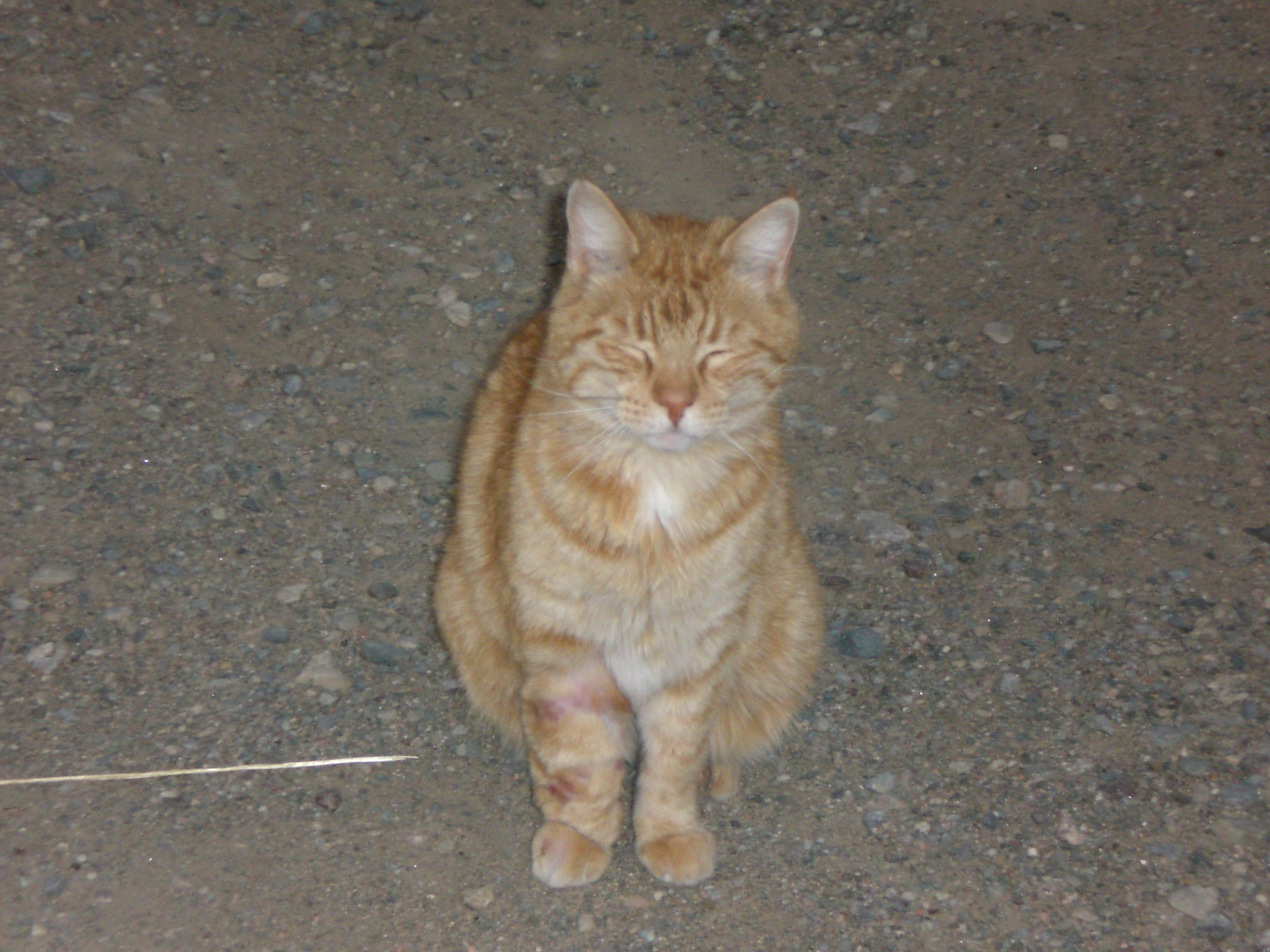
A happy Khin

In Another Language

January 12, 2014

Do you speak more than one language fluently?

How are you different to yourself or to others, according to the language you are using? How does the difference in world view embodied in a language reveal a difference in its speakers? What depth of knowledge, of concept and perception of the world is lost when a language dies for want of speakers?

Once upon a time, when I was much younger, I was fully bilingual, speaking, thinking, dreaming in French as readily as I do in English. After forty years of living in the Southwest, with rare occasion to use French, and then only for a few hours at a time, I felt that I was losing more than the ability to speak French. I was losing aspects of my identity, personality, self.

Some traits are obvious – I use my hands much more when I speak French. These past thirty years have steadily diminished both my gestures and the mobility of my face (as evidenced by videos), with my communication limited to English. What else about myself is disappearing? Am I less flirtatious? More reserved? Living more through my mind and less through my emotions?

Or are those changes the result of growing older, of my life experiences, of my spiritual practice – and would exist irrespective of the language I speak?

In the way of events in my life now, once I’d framed up an inquiry, the means to explore the answer presented itself. I’ve been introduced to a Cameroonian who has been pursuing graduate studies at a nearby university. He is fluently bilingual, and offers me the opportunity to resurrect my French. I’ve been pleased to discover that my language skill still exists, relatively intact, beneath the surface of my daily life and that, as I use it regularly, my fluency is returning. My pronunciation, however, definitely needs practice.

What else is or needs changing as a result of using a second language? Can I separate shifts in attitude or emotion that originate within me based on language, from those resulting from the topics of discussion?  What is the effect of conversing with an African, rather than a Frenchman, or a bilingual American?

A good friend with whom I discussed the effects of language on perception, told me of how his relationship with an acquaintance changed as a result of a change in use of language. The interaction of the two men had been conducted in a mixture of fractured Thai and equally limited English. Despite the limitations, they had begun to build a friendship. Then the American was observed by the Thai, chatting easily with a group of other English speakers – and “the friendship was not the same afterwards. He saw me differently, and seemed not to be able to be comfortable with me in the same way as before.”

Do I see myself differently, when I speak French? I’ve been remembering events from my earlier life that I’ve not thought of in a long time. An evening at a club on the Left Bank in Paris, during my junior year of high school (American School of Paris) to which I was invited by the son of a friend of my mother’s. Hugh had just returned from a semester in the US, and ostensibly was introduced to me by our mothers, so that he could practice his English. He already had plans for the evening, and agreed to include me. On the way to the Sorbonne, by metro, he suddenly asked what part of the US I was from. When I said Washington DC his next question was, “Is that considered the South?”

He was subtly trying to determine if I’d have a problem spending the evening with his friends – African students at the Sorbonne. I did not. We collected his two French-speaking friends from Dahomey (now Benin), and went on to visit a Nigerian who has in hospital. There we acquired a fifth member of the group, a visitor who spoke virtually no French. As the only person fluent in both languages, I became the interpreter for the evening, which meant that I danced with one or the other of the men from Dahomey who argued for each African nation developing itself economically, then with the Nigerian visitor whose view was that a Pan African approach to growth was essential to the emergence of the continent as a presence in the world. About every third or fourth dance, Hugh would escort me and – in English – check to see if I was enjoying myself, and if I minded talking so much politics.

I mostly remember the oddity of being – with Hugh – virtually the only white face in the club, which was a hangout for all the Africans living in Paris. I remember enjoying the dancing, and the adventure associated with being out with “older” guys (they were in their mid-twenties) and experiencing an evening so distinctly different from the norm of my life.

My first “true love” happened in French. I dated Patrick throughout my senior year, left him behind when I graduated and returned to the US to attend college, but never really left him behind. He visited me in Boston seven years later – and fifteen years after that came with his family to the US, and a visit at my home near Santa Fe. We still exchange greetings although we haven’t written letters or talked in a long time, partially because I “lost” my French, partially because I’ve found it challenging to translate some of my US, and particularly my rural Southwest, experiences into a language I know primarily as a fast-paced, urban expression.

In college, for about a year, I dated an African Olympic soccer star, coincidentally also from Dahomey. We spoke French when alone, but English in company. He led the college team to the championships, and would usually make one goal that was spectacularly “pour toi” – a solo, elaborate-footwork trip down the field showing off his skills. The rest of the game he was the consummate team player. He was also sadly troubled and displaced, enough to not return from a summer visit home between our sophomore and junior years. In this instance also, French was associated with experiences out of the norm of my life – even though I was minoring in the subject. Studying French literature and practicing translation of texts felt like part of my general academic life. Dancing the High Life, cheering at a soccer match off campus, trying to help my friend overcome the culture shock that was dampening his spirit – those were new and different challenges.

So am I finding that I’m more adventurous in French? Perhaps…

I certainly seem to be more frank. Because I do not have the fluency to mask my thoughts and feelings? Perhaps…

I notice, in the recounting, that the significant experiences being brought to mind by my use of French are all about interactions with the opposite sex! Hmmmm…..

To be continued.

Instead…

January 5, 2014

The adage that misery loves company bothers me. I’m all too aware of its accuracy, seeing it manifest in my recent work days as an easing of tension when I discovered that others are having the same problems with computer malfunctions that I have been experiencing. I’m glad for the reduced anxiety that accompanies not being the only one facing this problem, but embarrassed, nay ashamed of feeling relief that the problem is widespread. There is nothing appealing to me about knowing other people are facing challenges!

In my defense, I can also attest to feeling elated when a co-worker “got” a concept she’d been struggling with, thereby joining the company of those of us who were trying to help her understand and apply it. She was happy with her success, but she admitted some of her happiness was relief at no longer being alone in her lack of understanding.

One of the pleasures of my new employment is that the company ethos is very positive and supportive, the antithesis of “misery loves company.” Carping, impatience, brusqueness are not acceptable despite highly stressful work circumstances that have had some of my managers putting in 65 hour weeks for the past six months. The consequence is that all of us slightly befuddled, confused, easily overwhelmed “newbies” are quickly learning to express our uncertainties in the form of positive questions. By seeking guidance it turns out that we have also been identifying glitches in the data systems with which we are expected to work, becoming part of the solution and, in the process, feeling better about ourselves.

I come from a prior work environment which was very different. Above me (fortunately in another office in another city) the ethos was one of jealous attention to any perk awarded to someone else; a pervasive fear of being randomly called on the carpet for perceived faults never previously identified; a daily manifestation of what I recall being told is a military belief that the way to deal with recruits is to keep them complaining. “If they’re distracted with complaints, they won’t notice how miserable they are.”

Within my own domain, I tried to set a different tone, one of teamwork and all of us pulling together to meet the expectations of my out-of-town supervisors. For the most part I was successful, less so in my last few years when tensions associated with the many changes in health care translated to increasingly frequent “audit” visits by staff from the main office. They rarely found problems. They did leave behind the unpleasant taste of their “gotcha” approach to our work.

Sadly, when a serious problem was uncovered and I took responsibility for not having detected it myself, those who initiated it chose to deny culpability and were resentful of being expected to pitch in and make the necessary corrections. Our office did get things put right, but the atmosphere had become one of misery, loving company, dragging everyone down to the lowest unhappy level. Finding myself not strong enough to boost the prevailing mood up again, I resigned.

My new employer is advertising supervisory vacancies, and several people have encouraged me to apply. I have no intention of doing so. If possible, I never again want to be responsible for anyone’s work product other than my own. Twenty years of ‘growing’ employees, helping workers uncover and develop their potential, seeing them move out and up to better paying positions – I’ve served my time as an administrator. I do not believe, now, that just because I have a skill I must use it. Instead, I think I’ve earned the right to only do work I enjoy, which translates to only being responsible for my own work outcomes.

Yes, I mentioned helping teach a co-worker; I’m still oriented to bringing everyone’s skill and success levels up and doing all that I can to reverse misery loving company. I choose to do so voluntarily, not as part of the responsibilities of a defined supervisory position.

What is it about having a responsibility that converts a satisfying “want to” into a burdensome “have to” activity? Is the mechanism the same, when an acquaintance expects you to provide a form of support that you might willingly offer, but which you mind – maybe even resent – having to provide in response to the imposed expectation? What causes the same action to be, in one case a gift, in another an onerous duty?

Perception, a label, a naming of the action, an attachment to the idea of freedom of choice – any or all of these can and do change how we feel about what we are doing. Seeing others “similarly situated” changes an experience of vulnerability to one of “I’m not alone” and we feel better.

The challenge, as I see it, is to shift one’s perception away from “alone with this problem” without needing to find others who are similarly unhappy. I expect of myself that I will minimize occasions where I am manifesting the true – but very negative – “misery loves company” adage. I expect, instead, that I will remain sufficiently focused on the inner spiritual joy I know to be my true Self, that I will not feel alone with any problem. I expect to practice my daily contemplation, to stop and “check in” many times during the demanding and busy days ahead, so that I function in a space of shared pleasure, shared accomplishment, shared cooperation, banishing misery not just from my own space, but from the space and lives of those around me.

Joy loves company. Joy expands. The Soul is a joyful entity. I am Soul. Therefore I AM – joy.

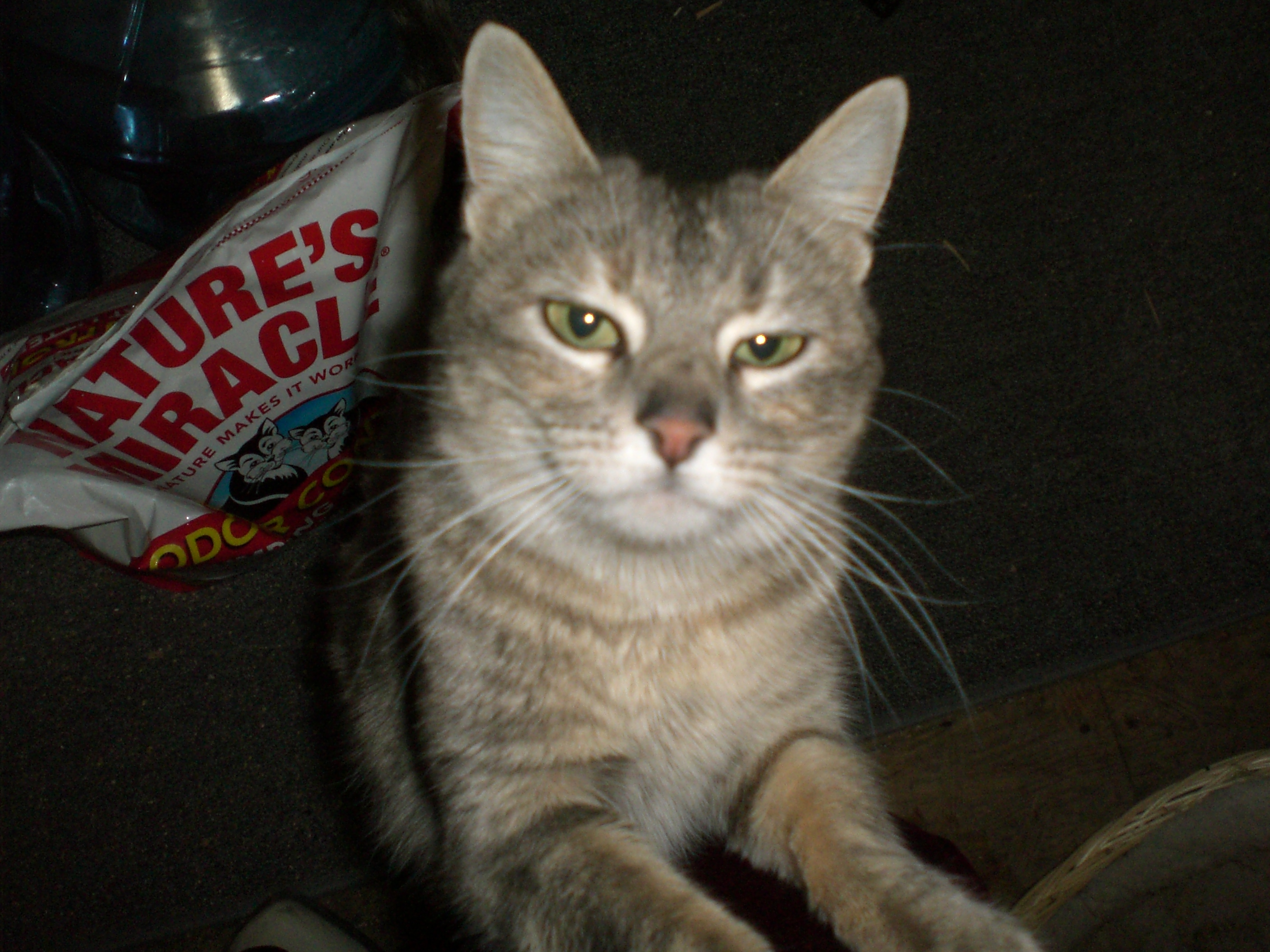
I am the Cat

December 27, 2013

How is it that, as a self-identified cat person, I write so much more often about dogs? True, over the years I’ve shared my home with more dogs than cats, undoubtedly because dogs more easily work out a pack status and accommodate to numbers. For every three dogs, I’ve offered food and shelter to at most one cat. The only time I can recall offering housing to two cats at once, the dominant cat (Natasha) had recently been a mother, her kittens just weaned and off to new homes.

Shifting possessions in a rented storage unit, I heard a frantic mewling coming from behind the building. Huddled under an accumulation of dead leaves blown against the metal siding, was a tiny black handful of fur with a wide open mouth, loudly proclaiming its presence. Chantilly Lace quieted as soon as I picked her up. She dug around against my chest until she found my generously-sized inside jacket pocket, then nestled her way into it and went to sleep.

My chores completed, I returned home uncertain how to introduce Chantilly to Natasha and to the dogs living with me. Isha, a lanky Lab cross, had recently finished her stint as a kitten sitter. She amazed me with her willingness to let Natasha’s brood line up and nurse on her dry tits. Once the last kitten began eating solid food, Isha resumed her role as junior dog in the pack that went daily into nearby fields, to chase rabbits and warn off coyotes. She did not seem disposed to play mother substitute once more. Driftwood (Golden/Collie cross) and Khan (another black Lab cross) showed the normal doggy disdain for felines. No help there.

Not knowing the outcome, I set Chantilly down on the couch between me and Natasha, and waited. My timing must have been perfect; post natal hormones pushed Natasha to wash Chantilly, whose grateful purring response reinforced a bond. The two cats became familiars. I never afterwards saw one without the other. Their preferred sleeping positions were snuggled head to tail (69 position) and belly to belly, Natasha’s grey tiger stripes accented by Chantilly’s glossy black tail, a fur boa draped across Natasha’s neck.

In more recent times, I’ve watched my horses tend to each other’s needs by standing side by side, head to tail, nibbling bugs off hind quarters and those hard-to-reach places that need a scratch or – in the case of the cats – a good wash. Natasha, several years older, nonetheless outlived Chantilly. Alone after years of partnership, Natasha became noticeably more affectionate with me. She would fall asleep against my thigh when I sat reading. Gradually waking from a nap, she was apt to begin licking my leg, her left over habit of grooming Chantilly before and after sleep.

Natasha’s long life ended with a tumor on her jaw that eventually precluded eating. She survived on determination and wet food thinned to drinkable consistency, until the day she climbed onto my lap, looked me over thoroughly, licked my hand and meowed an unmistakable request to be eased on to her next incarnation.

A goodly number of years – and quite a few short-lived cat visitors – later, I was gifted to share space with Haiku, a ginger tom whose disposition was a charming balance of feistiness and affection. He enjoyed the several dogs (a Bouvier, another Lab, a Scottie and my first Shih Tzu) and was not averse to sleeping beside one, or tussling for a bone with another. Indeed, his personality was so like that of Daisy, my departed beagle, that I sometimes wondered if he wasn’t her reincarnated essence.

Handsome Haiku

Handsome Haiku

Haiku was a hunter – solo but also in company with whichever dog felt like going after a rabbit or dove. He would stalk prey, flushing it toward the waiting dog, then join whichever canine (usually the Lab) in pouncing on the heedless rabbit, or jumping into the air to snap at the dove. Together the pair were successful a surprising number of times. Haiku usually left the carcass to his canine teammate – his was indeed the thrill of the chase, more than the achievement of a goal.

Late in his life, Haiku became a test subject for an anti-cancer treatment being developed by a chemist friend of mine, in partnership with a research biologist from Arizona. Haiku grew a tumor on his foreleg which resisted surgical removal, growing back quickly and so deeply that the only further surgery possible would have been an amputation. The anti-cancer medication had, at that point, primarily been tested on mice. Calculating an equivalent dosage for a cat, my friend and I started Haiku on a weekly series of injections to which the tumor responded by softening and growing at a markedly slower rate. My vet followed the experiment with interest – and helped me ease Haiku onward when his system began to shut down as a result of the combined stress of the cancer and older age. He made his mark, not just in my life, but via his test data which went into the pool of information being used in further development of the anti-cancer treatment. A noble contribution from a noble creature.

Miss Socks

Miss Socks

The three most recent cats in my household have been Socks, Limerick and Noelle, all rescues, the first two of whom lived with us for relatively short periods of time. Socks took up with my Bouvier, both of them older and sedate, enjoying sleeping together in the sun. Like a long-married couple, they died only a short time apart. Limerick arrived – and left – by moonlight, spending only a few months with us.

Limerick in the Light

Limerick in the Light

Noelle, now five years old, was a Christmas gift, rescued as a kitten by a neighbor and presented to me “as holiday company.” For an animal born wild, she took to indoor life with alacrity, claiming the utility room as her home and only going out if I carry her to a perch high up under the carport. She hangs out in the rafters, fussing at the dogs and demanding to be transported back to her indoor residence, yet requiring persistent persuasion to come down within my reach. Once back indoors, she hides from just about everyone who has reason to enter the room (she dislikes the noise of the washing machine but hums along with the dryer). Her favorite places to perch are wrapped around the vent pipe for the hot water heater, or atop a box in the room’s south facing window. She has also made herself a hidey hole under a low shelf and it is there she retreats with a flash of tail, if a stranger enters the room.

Noelle

Noelle

Noelle is a talker – but only to me and one aide, who works with my housemate on Sundays. She is affectionate with the two of us, but avoids other people, even those who would lavish affection on her. I don’t know why – she’s not had any negative experience of people in all the years she’s lived with me. Her inscrutable cat reasoning, I guess.

I recently received a cute, animated set of pictures from a friend, illustrating the stereotypical difference between dogs and cats – the dogs generally bouncing in excited response, the cats indifferent to whatever is offered them by their people. What my several cats have taught me is that differences between and within species are more nuanced, closely mirroring the differences between humans.

Or perhaps, what I observe is merely the truism that our pets become mirrors of ourselves? In which case, I guess I defy classification, being sometimes aloof, sometimes affectionate, generally independent, usually friendly, occasionally on guard, rarely wary, never mean, often changeable, my bad moods short-lived. I like to play, love to cuddle, enjoy affection but still, when all is said and done and now that I am in the latter years of my life, I am Kipling’s “cat, who walks by himself.” So be it. Amen.

Not a Christian

December 21, 2013

“I am not a Christian.” A simple, declarative sentence.
My housemate’s aide asked why we do not yet have a tree up, and I answered, “I am not a Christian.”

Why is this the first time I’ve made that statement so openly? In the past, I’ve evaded. “We don’t make a fuss over the holiday, since it’s just the two of us.” Or, “I wasn’t raised to celebrate Christmas.”

It’s true, I wasn’t. My culturally but not religiously Jewish upbringing included commemoration of holidays as a remembrance of history rather than as spiritual practice. I’m old enough to have attended public schools that started the day with both the Pledge of Allegiance and a prayer. For all of my first 6 years in school, I would silently add “Cross that last line out, God” when the teacher ended the prayer “In Jesus name.” Later, at convocations, graduations, other public events in pre-politically-correct times, I didn’t bother with the amendment. Other people could pray as they wished, and assume what they wished about me.

While I lived in Vietnam, in order to participate in a choir, I practiced with the group at a non-denominational Protestant church. My mother did not let me perform with them on Sundays, however. I lit incense at a temple with our Chinese housekeeper, and watched the elaborate funeral parades of some of Saigon’s wealthiest families. The first time I encountered the concept of reincarnation, I knew it to be truth, resolving as it did so many of my questions and doubts.

One of Many

One of Many

In college I took several courses in comparative religion, and sat in silence with the Quakers, drawn both by their lack of ritual and their commitment to social action. The practice of seeing “that of God in every man” enabled me to feel part of a larger whole, in contrast to my life’s lessons of being an outsider. I diligently sought, in the silence, to discern “God’s will for me” and to listen to the “still small voice” giving direction to my life.

I’ve rarely had – or perhaps only rarely remembered having – dreams. The few vivid ones that have occurred have always been crystal clear as to their meaning, and prophetic. My access to inner answers has been simpler, more direct than dream interpretation. If I frame a question before going to sleep, I awake with the answer. If I frame a question before participating in Quaker Meeting, I leave the meditation having received – either from within myself or from a spoken message – a sense of direction. I never conceive of this instruction as God speaking directly to me. Rather, I remember my grandfather’s answer to a question about why one should do right. “Because you know it is the right thing to do.”

I have followed my inner instruction because I know it to be right for me. Living and working these past twenty years amid practicing Christians, primarily Catholics, I’ve kept my views to myself in order not to offend, in order not to disturb their settled beliefs. I’ve been respectful of our differences, not feeling any need to explicate those differences.

For more than twenty years I have been student of MasterPath – a spiritual teaching, an instruction in how to find “one’s way back home” to realization of one’s true nature as Soul. Practitioners number now in the tens of thousands, come from many countries and a wide variety of faith – or no faith – backgrounds. What we have in common is the desire to know our Divine purpose – to know and be our true selves, to manifest wisdom unadulterated by considerations of body, emotions and mind.

Different religions use terms like man’s purest essence, Buddha nature, the Soul self, Christ consciousness to describe the state of pure consciousness to which my Path leads me. Many religions ascribe the capacity to manifest that pure consciousness only to the founder(s) of the religion, as something outside oneself, to be worshiped and admired, but not to be attained.

Regrettably many religions are now adulterated by ego interpretations of what it means to act “as a ______” (fill in the blank with Christian, Muslim, Hindu, Sikh, Jew, Buddhist, Taoist, etc.) so that instead of manifesting the beauty and truth of their faith, they demonstrate violence, intolerance, exclusion and dominance all in the name of religious purity. It should not surprise anyone that atheists point to the history of war waged in the name of religion as proof that belief in God has a negative influence on humanity.

Religious history has little to do with why I reached my seventh decade before stating plainly, “I am not a Christian.” Or maybe it does? Maybe the intolerance of differences reflected in all those wars waged in the name of religion has seeped into my being, quietly persuading me to not make an issue of my difference from my neighbors?

No, I think it has taken me this long to be truly comfortable with who I am and what I know to be Truth; to achieve a genuine indifference to reputation and how others perceive me; to feel certain in my knowledge of my Inner Being. In other words it has taken me this long simply to Be, and hence to be free to speak my own truth. I need not weight myself down with a responsibility not to offend others. If they are discomforted by me, so be it. In a far from cartoonish and Popeye’d way, I am what I am.

In the words of a blessing spoken at the start of a lovely Ba Gua exercise called Swimming Dragon, “I am health, I am beauty, I have enough.” It is enough, that I AM.

Choosing an Attitude

December 14, 2013

One of the elements of my new job that was most appealing – working from home – is also revealing itself to be a challenge in ways I did not experience the last time I had a similar employment. Just a few changes in external circumstances are making a significant difference in how I relate to my obligations.

The first time I worked from home was more than 20 years ago, when I had just moved to Sapello. I lived alone, and was hired to manage and build up the clientele of a home health agency. I enjoyed being able to spread my work over the seven day week, scheduling my leisure activities intermittently with travel to clients’ homes and with the inevitable administrative work required. While I was never “off duty”, I did have a lot of choice about what I did when. I was flexibly able to fit my personal obligations and desires around work demands, rarely feeling pressured because there seemed to be enough time for everything.

Eventually the agency grew to the point that we established an office, and I became subject to a more consistent and common work schedule. I left briefly, for personal reasons, and spent eighteen months self-employed. I completed several contracts and saw clients privately for counselling sessions. When I returned to the agency, again as its branch manager, I was subject to the standard “8-5 in the office” schedule, to which I adhered for fourteen years. Eighteen months of semi-retirement and job search brought me to my present full time, salaried and home-based position.

I do not now live alone. I share my very small house with my disabled former husband, for whom I am guardian and with whom I remain friends. His health is slowly and steadily declining. A sequence of aides come to the house, to help him during the day and to see that he gets supper. The schedule is meant to assure his safety when I am away. In consequence, there are several different people added to our small space, to whom I must accommodate when I am at home. While I am, mostly, relieved of responsibility for my housemate’s care, I do have to step in, unpredictably, when an aide is unavailable. And I am responsible to assure that the schedule of services is established and maintained.

Over time, our home has become divided into “my” room, which is also the living room that contains the day bed where I sleep, and the rest of the space – sleeping area for my housemate, dining area with the table covered with items he uses for his craft projects, kitchen and bath which we share. While I was still employed at the agency, the aides were scheduled during my work hours. In the eighteen months since, I find my necessary privacy and quiet time at night, often writing (as at this moment) or reading. My housemate watches TV with earphones on, allowing me valued silence for contemplation and creation.

Embarked on my new job, I have been away from home for extended periods of orientation and training. Shortly, I expect to be scheduled for long, busy days traveling to clients’ homes, interspersed with long and demanding days at home entering information into the complex computer systems my employer has been training us to use. I’ve had just a few weeks at home, to set up my “office” and establish those systems as functional in my rural, no-cell-service area. The systems are only partially in place so far. I do not yet have a land-based work phone, and I continue to uncover wide areas from within which I have no connection to the Internet. For clients who live in those areas, I will have to take notes and then enter data later at night, after I get back home.

My office is now in a corner of the dining area where my housemate – and his aide – spend most of the day. I’m having to learn to shut out their conversation in order to concentrate on the tasks that come to me by computer. On a recent visit to a building in Albuquerque newly occupied by some of the staff of my company, I walked through a huge room of employees in cubicles, thinking how grateful I am not to be similarly situated. I only have to shut off two voices, not hundreds.

I’m realizing that one of the serious sources of stress over the last years of my former employment came from the lack of doors on offices in the various buildings that agency occupied. As a manager, I relied on knowing (hearing) what was going on throughout the office. As a person, my need for silence around me, for auditory privacy, was consistently challenged. Personal validation and social support, also important to well-being, came from co-workers and from those engaged in the various volunteer activities I’ve pursued. For recuperation, reflection, and privacy I could count on quiet at home.

Changes in my housemate’s health, including recent medical emergencies disrupting my work day plans, new aides requiring instruction that he does not provide, and the expectation from my present employer that I be available on an 8-5 Monday to Friday schedule, have combined to eliminate my control over how and when I do what needs to be done. As a result, work is not staying in balance. It is seeping into my sleep time, rousing me at 5 am to try yet another way to solve a computer problem that proves not to be solvable by me. I begin to feel encroached upon by lack of quiet personal time – and by the necessity of at least temporarily giving up almost all of my volunteer activities.

During a recent two nights alone at home, while my housemate was in hospital, I was jolted to realize that many years have elapsed since the last time I had this space to myself for more than two hours! There is already so much activity filling the house, can I actually bring work here too, without losing the last bits of “me” space?

+++++

Yes, I recognize my issue is a matter of mental attitude. My spiritual Path teaches that “the mind is an excellent servant but a terrible master.” Private, quiet, contemplative space for myself will exist wherever I am, if I make it a priority – and “set my mind”  (no, actually not my mind, but my attention) to assuring it occurs.

I may not be able to go strictly by the clock, dividing work time from private time, especially while I’m still learning how to accomplish work tasks in an efficient manner. I cannot force my work computer to move through its paces more quickly. I cannot fix my situation of intermittent Internet connectivity, which disrupts the intended work flow process and requires me to “do double work” entering data already recorded on paper.

On a Recent Misty Morning

On a Recent Misty Morning

I can teach myself not to be frustrated by the computer’s slowness, and I can line up tasks to do during the waits (like creating a  card file of important numbers and contacts). I can “take time to smell the roses” or, in this winter season watch the birds. I can revel in my ability to look up from my computer to see snow dappled fields inviting to deer, doves perched in a row on the fence beside the feeder, a squirrel gorging himself on seeds, and little birds on the ground waiting to collect what the doves and the squirrel shove over the side of the dish.

Yum!

Yum!

I may need to extend work hours into the evenings and weekends – but I can still define times when I turn off all electronics and soak up the natural sounds of wind, dogs chasing rabbits, birds arguing over priority at their feeder, and snow dripping from the eaves.

Serenity surrounds me. I need only put myself within it. I am blessed.

Warm Furries

November 30, 2013

Five doves are fluffily hunched on the gate to the long pasture, seeming to emit waves of discontent because their bird food plate is piled high with snow rather than seed. I will probably succumb to the pressure shortly, and wade around the house with a bowl of feed for them. I doubt that my steps will imitate my Shih Tzu’s curious snow shuffle, though. I’ve been watching Shian Shung coming toward me down the drive, each front paw’s forward motion initiating a wave of snow rippling slightly sideward. It is the strangest looking movement, suggesting he has suddenly acquired the widely feathered feet of a nun pigeon. Or as though he is swimming his front legs through the fluffy white stuff that is belly deep for him.

De-iced

De-iced

My Min-Pin, Doodles, being a short hair, seems able to bounce through the same drifts, almost as though he’s walking on top of the snow instead of wading through it. Not any taller than Shian Shung, he has more of his minimal height in his legs, and an overall springier step. When excited, he can easily bounce to shoulder height on my Lab/Collie cross. And does so frequently, trying to get Blackjack’s attention away from the food bowl, gnawed deer bones, or the treats in my hand.

Aw, please...

Aw, please…

Doodles survived in his earliest life as a dumpster diver – he was about six months old when I collected him from a distant ranch and brought him to live with the rest of my motley crew. Eighteen months of ample and regular food has not yet broken him of the need to be in charge of any edible in the vicinity. Fortunately, Blackjack has a tolerant demeanor, only rarely exerting his considerable might to retain possession of a favored goodie.

Blackjack in Charge

Blackjack in Charge

The fourth member of my canine family is an elderly toy poodle – like Blackjack and Doodles also a rescue – with more serious personality issues. I know nothing about his earlier life, but it cannot have been easy. He was found at death’s door, totally dehydrated, his fur invisible beneath a matting of burrs, his belly distended and sagging to the ground. He growled and snapped at every attempt to care for him, requiring sedation by the vet before medical attention and a total body shave. Damaged intestines, causing the sagging belly, seems likely to be the result of being hit by a car; the injury continues to cause him intermittent constipation.

Warrior newly clipped

Warrior newly clipped

If left by himself, Warrior whimpers ceaselessly, or barks non-stop for an hour or more. Six months after arrival, he began to let me pet or groom him. Diametrically opposite to Doodles, he is reluctant to accept treats, which he requires be set down in front of him, to consider at length, before he will venture a nibble. Consequently, he loses them to Doodles unless they are offered when the other three dogs are off exploring. Which happens reliably enough that Warrior does get treats, but is also unhappily alone for periods of the day.

Blackjack shows remarkable patience with the littles. He lets Doodles and Shian Shung play out attack strategies, his legs and ears the more common targets. He makes sure Warrior has the warmest spot on the porch, and tolerates Doodles’ determination to be first at the food bowls. I remember to give him an extra rub around the head and muzzle, and to tell him he is the senior, and most essential, member of the pack. His calm demeanor, his defining of the boundaries outside which the others should not roam, his lessons about what is and is not fit to eat, and his manner of greeting – or guarding against – visitors to my acres all combine to transmit the expectations I have set about tolerance, respect, and appropriate behavior.

The Littles

The Littles

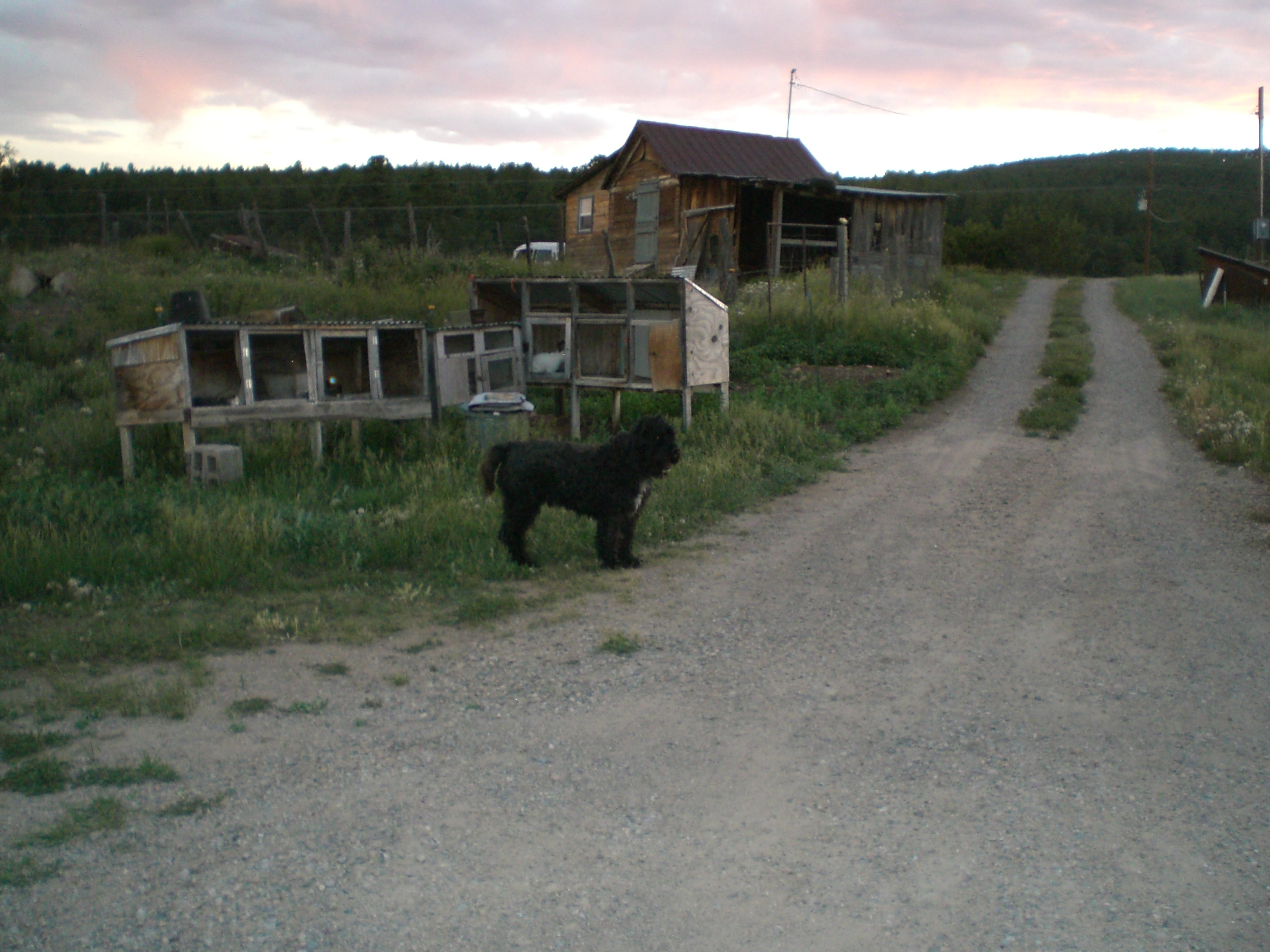
Over the 40 years I’ve lived in rural settings here in northern New Mexico, my one consistent rule for all pets has been that they must get along with one another. Not like, not necessarily interact, but tolerate and make space for all who wind up calling my home theirs. As a result, I’ve had a dog who let newborn kittens nurse on her while their mother took a break from the constant demands of parenting. I have photos of a cat cuddling with a Bouvier de Flandres large enough to squash her if he’d rolled over. That same Bouvier encircled an escaped rabbit and kept it safely between his paws until I got home and returned Mr. Bunny to his cage.

Guarding the rabbit cages

Guarding the rabbit cages

The coincidence of Thanksgiving with the first day of Hanukkah – an event apparently not to reoccur for an enormously long time – allows me to celebrate my two favorite holidays in one. Favorite because both encourage not just thankfulness, but also appreciation of freedom, joy in new beginnings, and the pleasure of connecting across boundaries.

In a heap

In a heap

I am grateful to have observed these same feelings played out amongst my four-legged family members.
I am grateful to be reminded by my furry friends, each time I hunker down to pet and play with them, that I don’t have to wait for Thanksgiving or Hanukkah to participate in a demonstration of tolerance, respect, and appreciation.
They keep me sane, they make me welcome, they direct me back to balance when I start to tilt off center, they define home.
For all this, a lower reflection of the inner beauty being shown me by my spiritual Master, I am thankful.

Small World

November 24, 2013

Have you ever swapped “small world” stories?

Some are simple, like the appearance in the training class for my new job of a woman who lives barely five miles from me in the rural area denoted by a dot on the map called Sapello – a woman I’d met once briefly before, but did not know until we were paired, during the training, for motivational interviewing exercises. Turns out we have a number of common interests, and a shared love of living “on the frontier” as our employer labels the area we serve.

Other small world stories are of more surprising meetings (Coincidences? Fated encounters?)

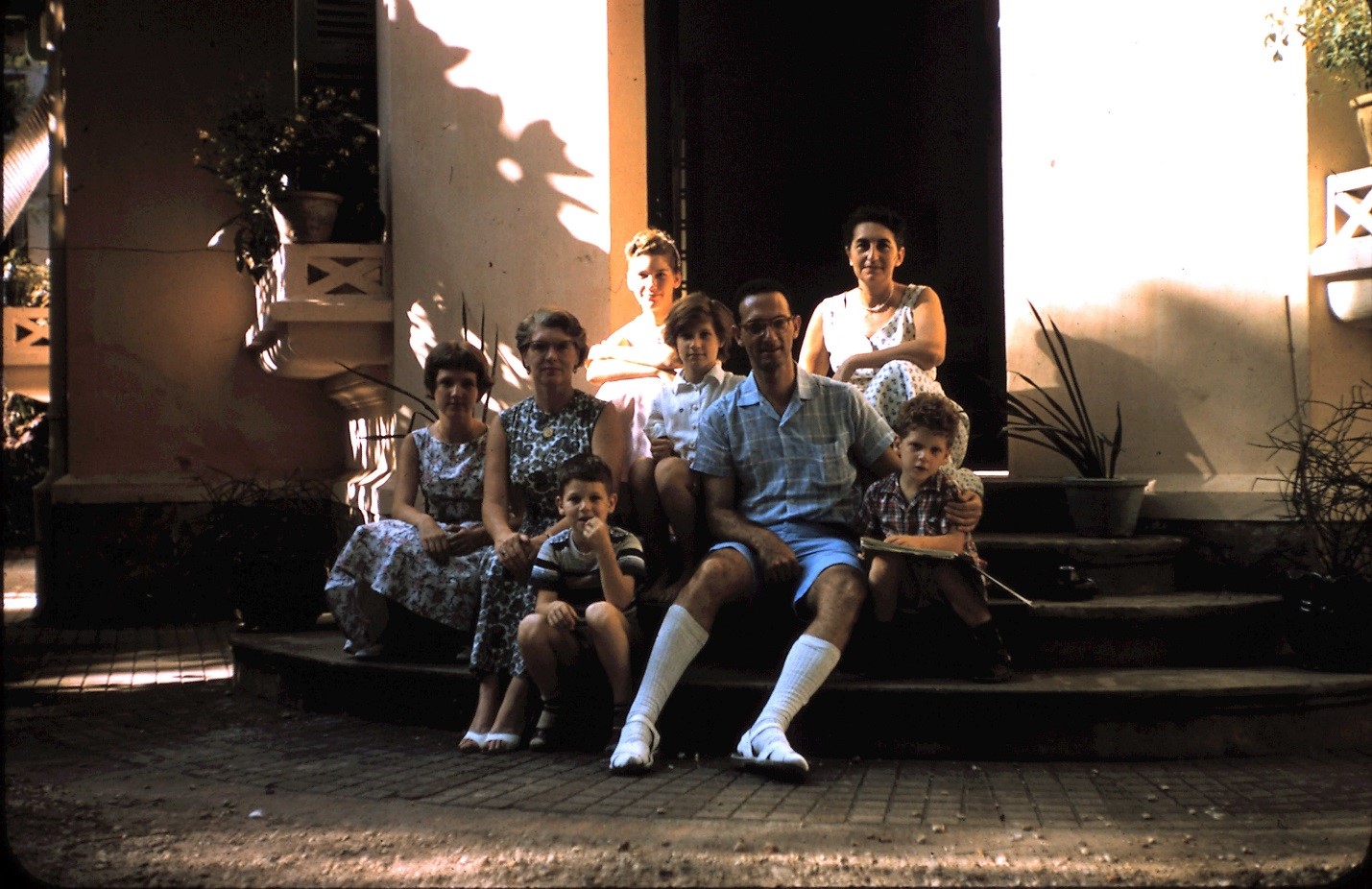
Two of mine have their roots in my stay in Vietnam, from 1956-1958. I was in my early teens, my father assigned as the economic officer at the U.S. embassy in Saigon.  Ingrid, a few years younger than I, was one of my friends. Both of us were socially awkward, neither of us fully aware to what extent the stresses within our families contributed to that lack of ease. We – in modern parlance – hung out together. After Saigon, Ingrid was sent to a boarding school in Colorado and I moved with my parents moved to Paris. She visited once, briefly, during those three years I lived in France. Then we lost touch.

Blaufarb Family with My Mother and Me Behind Them

Blaufarb Family with My Mother and Me Behind Them

Skip to four years later, my junior year in college, and a trip to New York City.

With my then boyfriend Ray, I was on a date that included a meal at the Russian Tea Room. We walked into the dining area, and saw before us a large family group seated at a round table. Ray started forward to greet one couple and their daughter Pamela, a former girlfriend from his high school days. I started forward to the same table to greet Ingrid’s parents. Ray and I looked at each other. “You know these people?” he quizzed me.

“Yes,” I replied. “Those are the Blaufarbs, parents of my friend Ingrid.”

“Pamela’s aunt and uncle. I’ve been told about them.”

I didn’t share with Ray how immediately I felt transported back to the tropic heat and teenage anxieties of Saigon, where I’d heard too much detail about Ingrid’s socially popular cousin Pamela!

*******

My second Vietnam-based story begins at its end, tying Saigon to Sapello. One of the people working in the office of my vet is a tall, energetic woman a few years older than I, named Susan. She is the sister-in-law of Louie, who trained my younger mare, and with whom I became friends when I first moved to Sapello in 1990. At some point in my on-going  conversations with Louie, it came out that his sister had “run off with a Frenchman” when she was in her late teens, and that the siblings had only reconnected many years later, when they both settled back near their mother. in the Sapello area.

Louie told me that Susan had gone to work for “our” vet when he set up practice about three miles from my home. On my next trip in with an animal in need of care, I met Susan. Remembering what Louie had told me, I mentioned that Susan and I had a connection of both knowing French. The next few sentences revealed that we both learned our French, not in Paris, but in Saigon. We had both spent leisure time at the Cercle Sportif, the “club” where we swam, played tennis, and in my case took classes, and performed the French Can Can at one of their “spectacles” – shows put on for the enjoyment of the members.

Contemplating a Plunge

Contemplating a Plunge

Susan’s time in Saigon preceded mine – she left in the spring before the October that brought me to Vietnam, just in time for my 13th birthday. Susan’s Frenchman, whom she married at seventeen but divorced just a few years later, was the older brother of Marie Claire, with whom I became friends in the dance class, and with whom I performed that Can Can.

******

Ingrid now divides her time between New York and Maine; her son went briefly to Swarthmore, where Ray and I attended college. Looking through a Swarthmore Alumni Bulletin sent to her son, Ingrid found an essay I’d written. Through the college, she obtained the information to once again contact me, some forty years after our last encounter in Paris. I’ve since traveled to the East Coast. We met for an afternoon. Ray recently traveled west, and we also met after a parallel forty year gap, as I recounted in a post this past summer.

Meanwhile, Susan is retiring from the vet’s office for a combination of reasons, including the fact that the vet is introducing a complex new computer system to the practice. Susan “does not get along well with computers” and decided the stress of trying to do so would be an unacceptable strain on her health. I’m feeling vivid kinship with her now, as I try to understand the complexities of the several computer systems I must master in my new job. I don’t share Susan’s aversion to computers, indeed feel fairly comfortable with them – or thought I did – until I encountered the multiple encrypted layers of security that must be understood to navigate around a health provider’s regulation-compliant system. Thank heavens, Presbyterian’s tech support is a seven-days-per-week operation!!!

I expect I’ll still see Susan occasionally, as we live quite near one another and have overlapping interests. I’m in intermittent contact with Ingrid, and with Ray, by email. If the occasion arises for me to introduce them to Susan, will that somehow close a loop that stretches over fifty-five years and around half the world? Linkages through the Internet, which enable me to “chat” simultaneously with a friend in Singapore and one in Norway, have already made the world much smaller, but enjoyable as they are, those conversations don’t have the same feeling of “oh my, how amazing” that accompanied my encounter with the Blaufarbs in New York, or with Susan at the vet.

Is it just me, or is it something to do with the life experiences of my age group, that makes the face-to-face connection of a small world encounter more precious than even the most globe-encompassing Internet link?

Disconnects

November 17, 2013

It’s odd how easily what seems like a simple communication can be misunderstood. I received a spread sheet from one of the higher ups at my new job with a label of “Staffing and Skill Set”. It only listed two of the six areas in which I have skills. I replied with a query regarding why my other four skill areas were not shown. Then from a co-worker I heard that the spread sheet is meant to indicate the areas of specialty to which we are being assigned. OK. Those two are fine with me. I replied to the emailed spread sheet with that acknowledgement, only to learn from my manager that the sheet was indeed meant to cover all our skills. Full circle, confirming a gap in communication.

*********

This morning I tried to complete online registration for the 401(K) I’m eligible to participate in, through my new employment. The managing company’s form kept giving me error messages related to the amount of contribution I wished to make, although the money is already being deducted from my check in accord with a paper application I completed through my employer’s Human Resources office. The online form doesn’t provide options for non-traditional contributors like me, who are not restricted in size of contribution, due to already being over retirement age. Nor is there any way to communicate this information without waiting until next week to call and – presumably after punching lots of irrelevant buttons – hopefully reach a person with whom I can talk through my situation.

*********

Last week, I joined a group of my classmates (all career women, all aged early 40s and up) in the bar area of the hotel where we are housed during orientation. We were taking advantage of the free drink per person, and light snacks, offered by hotel management as a thank you for our extended stay. That evening was our last together, at the end of our five weeks of orientation, before we dispersed back across the state, to work from home.

We progressed from drinks to dinner, and from talk about our training and upcoming new responsibilities to more personal sharing of events in our lives. Unaccustomed to this sort of socializing, I mostly listened – and laughed at some of the wryly told stories. Young teen offspring wanting tattoos led to the revelation that the person we all thought least likely to have one actually had three. She showed them to us, discretely – breast, hip and lower back. Another woman stood to reveal her numerous decorations on legs, arms, neck, lower back – and one that remained hidden because she said she couldn’t reveal it without stripping off her top.

She did not hesitate, however, to offer up her (clothed) chest for “a feel” of her saline implant breasts in response to a query from the woman sitting next to her, who recently underwent a double mastectomy.

At this point, we became aware of the lone male in our vicinity (by that time the only other patron in the area) whose attention was fiercely glued to his smart phone. He appeared to be in his 50s, muscularly well-built and attractive, grimly determined to ignore the behavior of our cheerfully frank and laughing group. We did, briefly, consider inviting him to join us. Embarrassing? To him, or to us? No, just funny – and a reversal of experiences we have all had, being professional women who occasionally go alone into predominantly male environments.

*********

Direct deposit of pay is mandated in my new work environment. I expected to receive a pay stub, or some similar accounting of the allocation of my money, when the disbursement was made, but so far nothing has arrived. Maybe there’s a place within “my” portion of the employer’s website to find this data, but if so I haven’t been introduced to it yet. It is, for me, a singularly uncomfortable feeling that changes are being made to my bank account virtually without my knowledge. A lifetime of instruction on the importance of being in control of my financial status is totally undermined by processes that seem designed to “go behind my back” and wrest that control away from me.

Communication is connection.
A feeling of connection is important to emotional well-being.
Why then is so much of everyday experience so disconnected, misinterpreted, overlooked, or ignored?

ERRor, ErroR, ERroR, ErrOR

Chaplin and Me

November 9, 2013

As I headed toward the employee entrance to Presbyterian Tuesday morning, I flashed on an old movie – a Charlie Chaplin, I’m pretty sure but I don’t recall the title – of flocks of workers pouring into a plant, each showing an ID card and punching in before taking their places on an assembly line. In Albuquerque on Tuesday, we were a smaller clutch of workers, each wearing an ID badge which provides access via a scanned bar code, through multiple levels of security-locked doors, to our classroom, desks, and computers. How did I get to my seventh decade without ever working in such a large, regulated establishment? Even the government programs where I’ve been employed feel relatively small by comparison.

In orientation, we were told that Presbyterian hires about 2000 people per year, employs more than 8000, and receives over 100,000 applications for the annual openings created by turnover or – in the present case – by the expansion of its Medicaid program services. We were congratulated on being “special” because we were part of the select group chosen to be hired. I listened to the numbers in some awe, not in self-congratulation but rather in disbelief. What have I gotten myself into?

These past two days my subgroup (half the class of new Care Coordinators) received training on the still-being-completed-and-tested computer system which will be the primary support of our jobs. We will receive our assignments, create our case files, document our time and our activities, meet State and Federal mandates all within this one system. Given that there are quite a few bugs in the program, and pieces that have not yet been implemented, the training was likened to teaching us “to run the systems that fly the plane that the State still hasn’t finished building.” Take off is set for January 1st. Ready or not, off we go.

What fun!

Assigned to work within the Presbyterian computer system from my hotel room, I spent two hours in frustration at my inability to get through multiple layers of access in order to connect my highly secured work laptop to the hotel’s Internet. A classmate finally figured out the path, based on issues she’d had previously with her connectivity from home. I remember, back in the dark ages when they were new to the workplace, how we were assured that computers would make things easier.

Hah!

My homework included an opportunity to provide feedback on fixes the system needs to make it into a more effective tool of care management. The programmers have had barely seven months to design a system that normally is budgeted for a year or more of development and testing. I do appreciate being given a voice – I just wish there were fewer issues for me to speak up about! And that the changes and improvements could come sooner than the projected six months out from “going live”, which happens in less than two months.

Is any of this beginning to sound like Healthcare.gov?

Remember, Niki, you were hired for your “adaptability, independence, ability to think on your feet” and your implied tolerance for a very unstable and changing work environment. I do have those skills in person, and person to person. I’m not so sure I have them when it’s a matter of interacting with “technology”. I still complete the cards my students earn in their CPR certification classes on a (gasp) typewriter because that is easier for me than trying to create a computer template that will instruct my printer to produce them with all the right info in the correct small spaces.

Call me a Luddite – I’ll wear that badge proudly!

Until now, even the “field” workers for Presbyterian have been based in offices in towns and cities. They speak of those of us who will be working from our homes scattered in rural areas as working on the “frontier” – but still plan for us to use systems that rely on urban technology. I’ve only been able to access DSL at my home within the past year. If I lived a mile farther up the road I would not have it at all, would be dependent on satellite (or dial-up) and couldn’t get my work computer even to boot up due to timing out from the connection. As it is, the DSL flickers enough to pause my work on my fast and lightly loaded personal laptop – it repeatedly froze me out on the work computer which is slow and cumbersome, weighted down with multiple very complicated programs. Yet the concept is that I will take the laptop with me to client homes, to complete interviews and assessments.

I don’t think so.

Not when most of those homes don’t have connectivity at all – isn’t that what’s meant by the frontier? Out where people are living simply, often in the same way as their parents, grandparents, great grandparents, etc.?

We’re told we’ll be given paper copies of all the documents we have to fill in – and that we can then scan and send them to an assistant in the central office who will code them into the computer. That procedure will allow me to get my work done within the established time frames. It is offered as a support strategy – so why do I feel as though it means I will be dumping chunks of my work off onto someone else?

Because in my 20 plus years as regional manager for a home health agency serving that same rural frontier, I had no administrative support? If I needed copies, I made the copies. I typed my own letters, entered all my own work into the computer systems, and was the support for my staff when they got behind, or needed help tracking certification due dates, etc. We were a branch office of 5 with a case load around 300 clients and a field staff of close to 350, for whom I was the top-of-the-chain-of-authority supervisor.

(Now you know why, as I went job-hunting this past year, I determined I wanted a position in which I would only be responsible for my own work product!)

Had all those employees come into the office every day, we would have looked like my experience of this past Tuesday, or the Chaplin film, minus the time clock and swipe cards.  But my field staff were dispersed across a quarter of the large state of New Mexico. I went to them (as I will be doing to member homes in my current position) rather than bringing them to me. In between visits, I communicated with them by phone – either directly, or via their supervisors.

My new supervisor expects me to communicate primarily be email – with phone calls when email isn’t available. The company does recognize that even cell service is spotty “on the frontier” so they are acquiring a few satellite phones to be checked out to staff when they may be needed. I suspect, if I end up covering the same area now as I did for the home health agency, I will have one of those phones permanently in my car. Along with my emergency survival kit, including an extra book (paper, not Nook) to keep me entertained if I’m stranded.

Along the Open Road

Along the Open Road

My new job will definitely be an adventure! I’m curious to see how the blending of futuristic programming and frontier life plays out. I look forward to working in an environment that stresses being part of a team, offering clerical and administrative support I’ve not been used to receiving. I’ll do my best to not be a burden on my support staff, which means I’m committing to becoming as proficient with the computer systems as my connectivity will allow. I’ll need encouragement to resist being tempted by my paper “backup” procedures.

Will you come along on this adventure with me?     


Only Fragments

Love Letters to the Tar Pit

KarusaaVerse

Words that Sparkle, Thoughts that Ignite: Fueling Your Imagination

Leaf And Twig

Where observation and imagination meet nature in poetry.

Millarson Diaries

Personal Musings and Thought Experiments

The Beauty Along the Road

Discovering Beauty in the small details of our lives

Flowerwatch Journal

Notes on Traveling with Flowers

1eclecticwriter

Wide-Ranging Commentary

Spirituality Exploration Today

Delving into the cross roads of rationality and intuition

smilecalm

Life through Mindful Media

A Good Blog is Hard to Find

I will shatter a word and scatter the contents into the wind to share it with the world.

Ray Ferrer - Emotion on Canvas

** OFFICIAL Site of Artist Ray Ferrer **

AKA The Versatile

Fashion | Lifestyle | Food & Travel | Beauty | Fitness | Education | Product Reviews | Movies | Doodling | Poetess

Aging Abundantly | Women Over Fifty | Empty Nesters | Caregivers | Aging Gracefully

Finding Joy at Every Age with writer/philosopher Dorothy Sander

ARTZZLE

Helping with the Pieces in Life's Puzzle of Art and Design

Project Light to Life

A bucket list blog: exploring happiness, growth, and the world.

The Daily Post

The Art and Craft of Blogging

Any Shiny Thing

MIDLIFE MAGIC

allmostrelevant

@allmostrelevant

The Irrefutable Opinion

Assaults on the Casually Mundane by K. Jean King